
Money and wealth are considered to be of great importance not only in China, and many people are asking for divine help to bring prosperity and fortune in their lives. Since Chinese nation tends to be very practical and believe the more you ask, the more you get, maybe, that’s why the Middle Kingdom have so many Gods of Wealth. All of them lived in ancient times and each has a story to share. To keep them in order, as money like to be accounted for properly, there are several classifications.
The first one – according to the functionality.
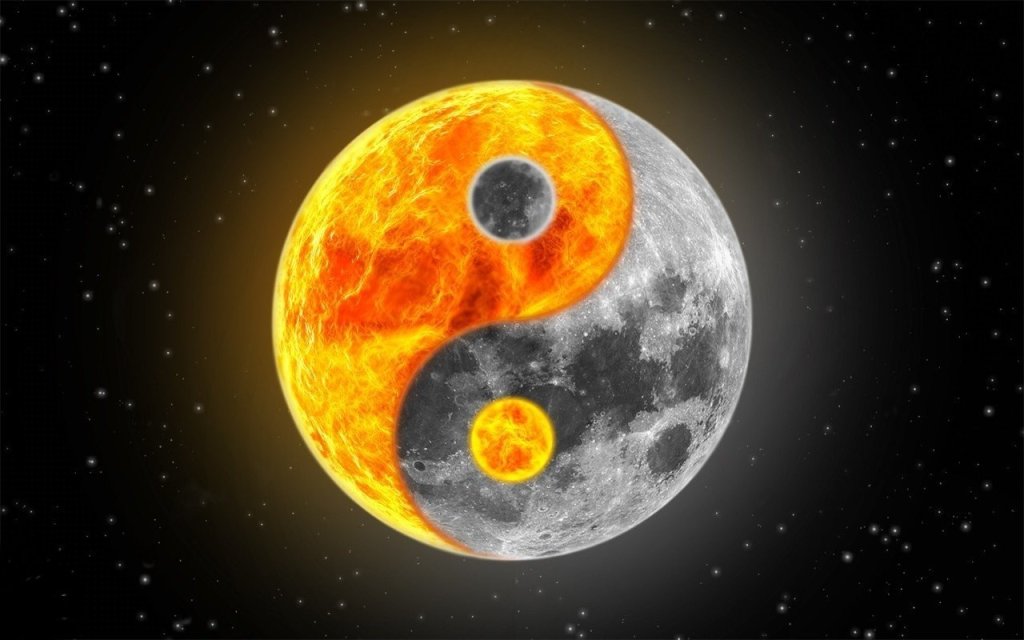
One Civil One Military 一文一武 divine division of highest order often refers to Sun spring God Qingdi 青帝 and Moon God Zhao Gongming 赵公明.
The next division of responsibility would cover five major areas of money-making described in ancient texts and go as follows:
Wealth driven from Literature and Civil Service 文 is supervised by the emperor Wenchang 文昌帝.
Military and Martial Arts 武 God of Wealth are Zhao Gongming 赵公明.
Righteousness 义God of Wealth is Guan Yu 关羽. Famous hero of Three Kingdoms was honoured as the God of righteousness and wealth because he had no money to take. Also, he is the one to protect the business from evil intentions of competitors.
Chai Rong 柴荣 is Nobility 君 God of Wealth, this king of Eastern Zhou is nominated as emperor’s God of wealth and hence is the most honourable one among this cohort.
Su Fulu 苏福禄, Chinese who one of the first went to Southeast Asia to do business, is regarded as the Partial 偏 God of Wealth getting the benefit from remote areas. The birth of this God of wealth may also be related to the background of modern China’s foreign exchange, trade and immigration. Being partial to the God of Wealth means that one does not only take money by means of unorthodox ways, so the five ways of literature and civil service, martial arts, righteousness, nobility and long distance can be regarded as the five major sources of getting rich and attracting attention of these Gods of Wealth.
The second one – according to Five Elements theory, Gods of Five Roads, leading to different directions 五路财神
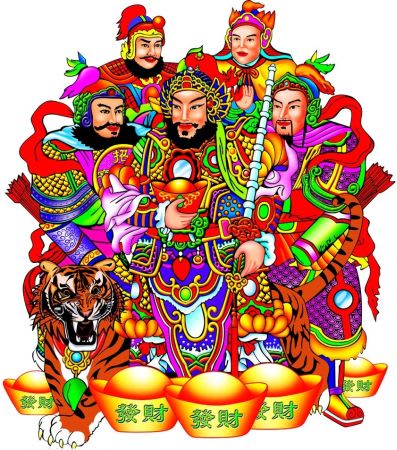
The first version of Gods of Five Roads introduces Zhao Gongming 赵公明 and his four great generals, the East Road God of Wealth, Xiao Sheng 萧升, the God of Wealth on the West, Cao Bao 曹宝, Chen Jiugong 陈九公, the messenger of the God of wealth in the South Road, and Major Yao 姚少司, the God of Wealth in the North Road. Zhao Gongming is positioned in the centre and gives them orders. This story of the five gods of wealth can be traced back to a famous Chinese Ming Dynasty classic “Investiture of the Gods”. Zhao Gongming was honoured as the True God of Golden Dragon Almighty and Dragon Tiger altar. He led four good deities: finding treasury Xiao Sheng 萧升, God of enjoying a life of ease and comfort Cao Bao 曹宝, solicit wealth emissary Chen Jiugong 陈九公, and immortal official in charge of business profits Major Yao 姚少司. They all are bringing auspicious wealth and fortune, therefore commonly known as the Gods of Wealth of small five roads.
Second version of this ranking picks up the most famous five Gods of Wealth worshipped all over China and are known as Big Five Roads Gods of Wealth.
Bi Gan 比干, East Road God of Wealth
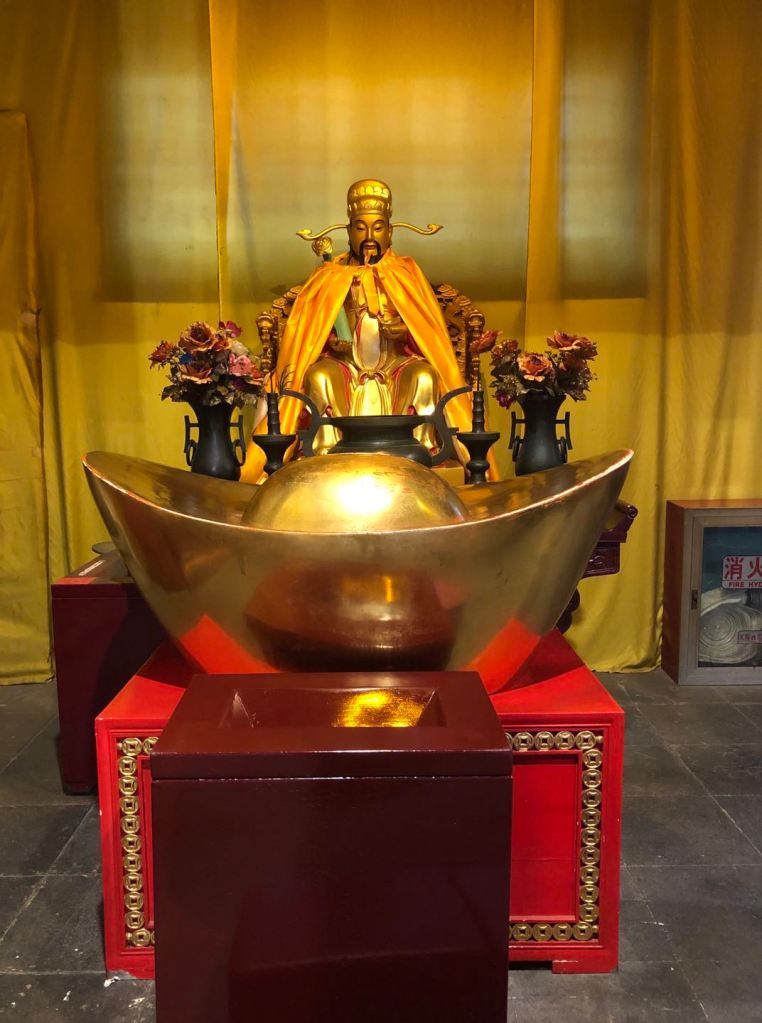
According to “Investiture of the Gods”, Bigan was uncle of the last king of Shang dynasty, responsible for the state finance. He was famous for his devotion to state duties and excellent management of the country’s finance. Bigan dared to point out to his nephew the ominous influence of Daji, the fox spirit possessed favourite concubine of the last king of Shang dynasty. Daji, of course framed him in return, saying he needs to prove his loyalty by cutting out his heart.
Later, the people remembered his right deeds, so he was regarded as the God of wealth and took charge of East Road financial resources among the people.
Guan Yu 关羽, the God of Wealth of the West Road
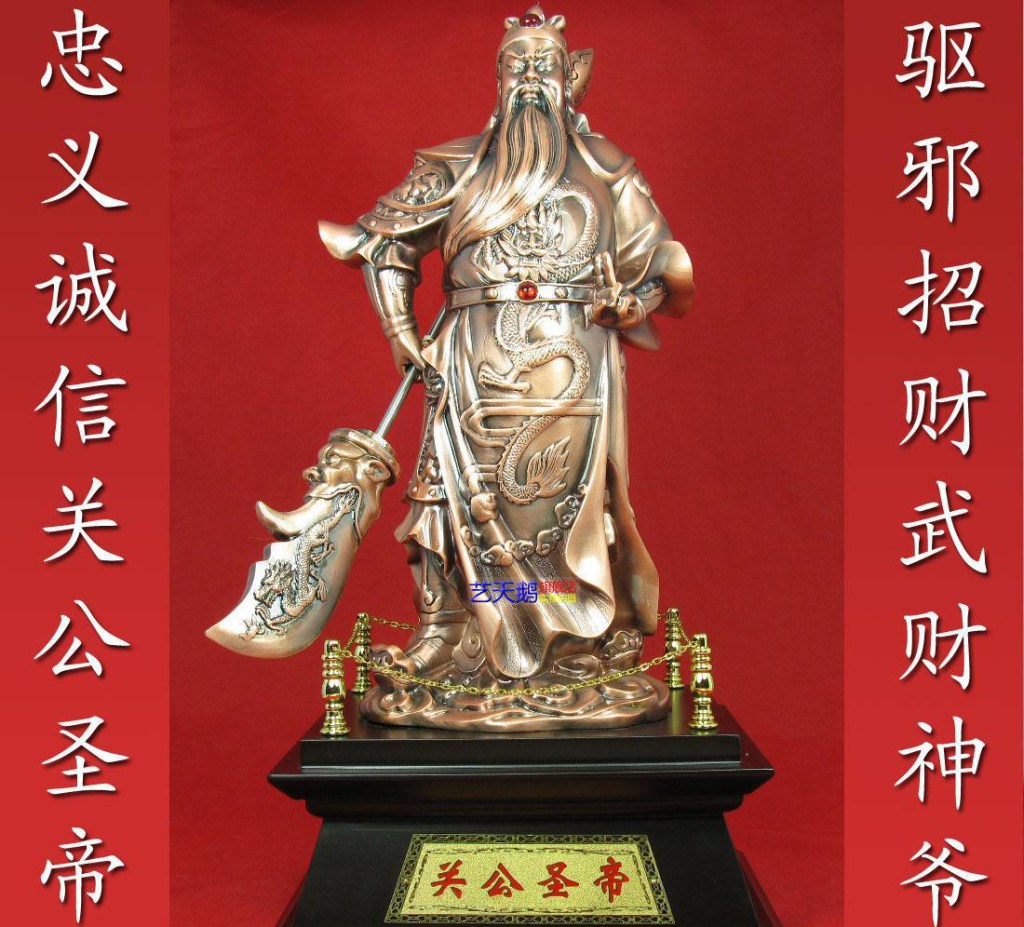
Guan Yu, commonly known as “Guan Gong”, was one of the five tiger generals of Shu Han in the Three Kingdoms period. His martial skills were outstanding, but how he could transform into the God of Wealth? The reason is, that during the Ming and Qing Dynasties, Shanxi Merchants dominated Chinese markets. They often helped each other and made a fortune together. Shanxi merchants also needed a place to gather and a patron, powerful and impressive enough. As Guan Yu was born in Shanxi, Shanxi merchants decided he is good enough to protect their business, therefore built a Guandi temples all over the country. People in different places followed suit and made a wishes for money and fortune at Guandi temple. Obviously, this practice was successful and as time passed, Guan Yu was regarded as the God of Wealth by Chinese in Mainland and overseas. Because Guan Yu is a great general of Western Shu, he is in charge of the financial resources of the Western road.
Chai Wangye 柴王爷, the God of Wealth of the South Road
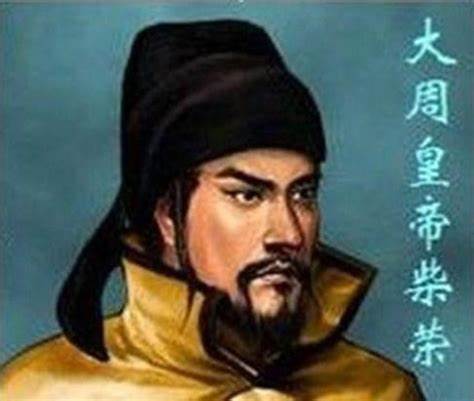
After Five Dynasties period, Later Zhou emperor Chai Rong 柴榮 (also known by his temple name Shizong 世宗), commonly known as “Chai Wang Ye”, was granted the title of Celestial King of Fortune. He started to make money from a small family business and gradually set up business houses all over China. Future emperor managed to trade porcelain, tea, umbrellas and other businesses very successfully. He supported his uncle-in-law Guo Wei to recruit troops and put an end to the chaos in the country. After Chai Rong succeeded to the throne, he loved the people like his own children. He specially ordered craftsmen to carve the statues of farmers and peasant women in the palace. Despite living in luxury, he always reminded himself not to forget the suffering of the people. From the Song and Yuan Dynasties, Chai Rong was regarded as the God of Wealth by the people in the Central Plains, as well as the patron saint of kiln craftsmen, construction workers and transportation industry operators. Chai Rong was in charge of the financial resources of the South Road because he made a fortune by pushing his carriage all the way South when he was young.
North Road God of Wealth Zhao Gongming 赵公明
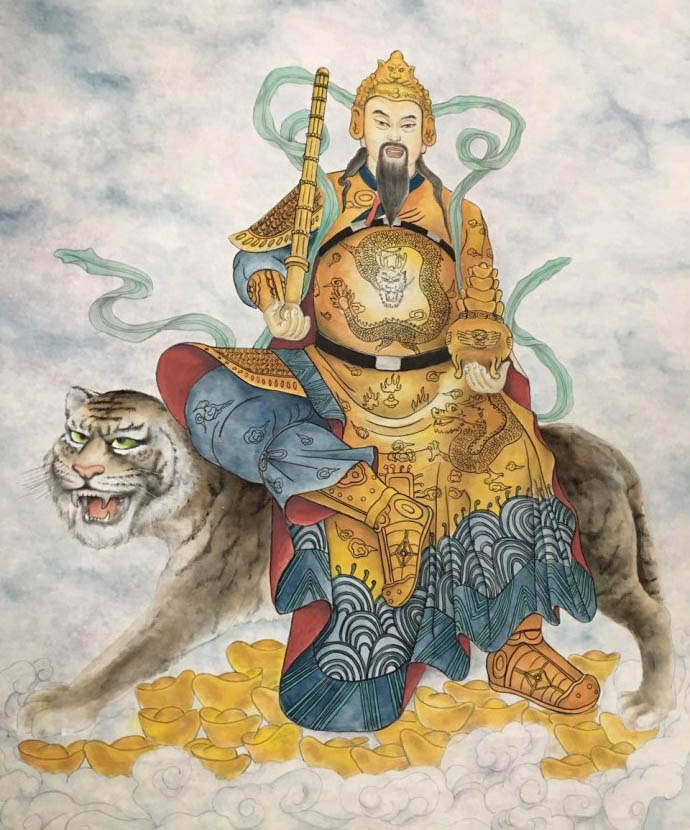
Zhao Gongming, also known as “Marshal Zhao Gong” is different from the previous gods, who were real historical figures. There are no trustful records of Zhao Gongming in the official history, therefore, most probably he is a fictional character. According to legend, Zhao Gongming has a black face and thick beard, wears armour, rides a black tiger, and holds the silver whip and golden yuanbao (ingot) in both hands. The earliest records of Zhao Gongming’s myth can be found in the Wei, Jin and Southern and Northern Dynasties stories, but at that time his duty was not to control the wealth of the world, but along with the other five Gods to prevent plague. In the Ming Dynasty novel “Investiture of the Gods”, Jiang Taigong named him the God of Wealth. It is said that Zhao Gongming was born in the North of the Central Plains, so he is in charge of the financial resources of the North Road.
Wang Hai 王亥, the God of Wealth of the Middle Road
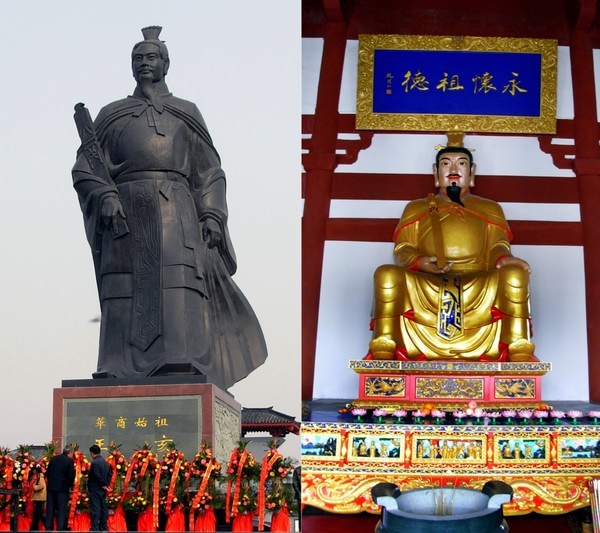
Wang Hai is said to be the seventh monarch of Shang state during Xia Dynasty, that is, before the establishment of Shang Dynasty. He once helped his father to deal with the flood, invented the ox cart, and encouraged people to use the ox cart to pull goods out to trade. Because most of the people engaged in this kind of trade were from the Shang 商 state at that time, people called those who engaged in trade 商人, “merchants”. It can be said that Wang Hai opened up the precedent of Chinese business, so he was called “the ancestor of Chinese merchants” and “Good for Grace God of Wealth”. The ancestor Wang Hai was appointed as the God in charge of the financial resources of the middle road.
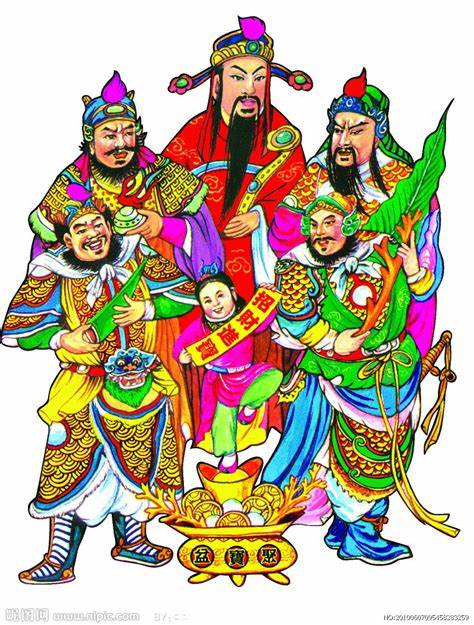
Hope you got a general overview of the major characters. More stories about Gods of Wealth and their temples are to follow in the next articles.
Helena Avdjukevica
April 25, 2021
 Walk with the Dragon