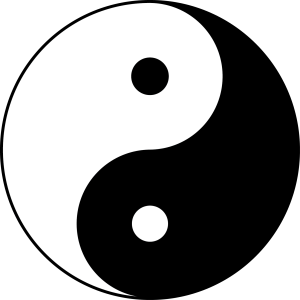
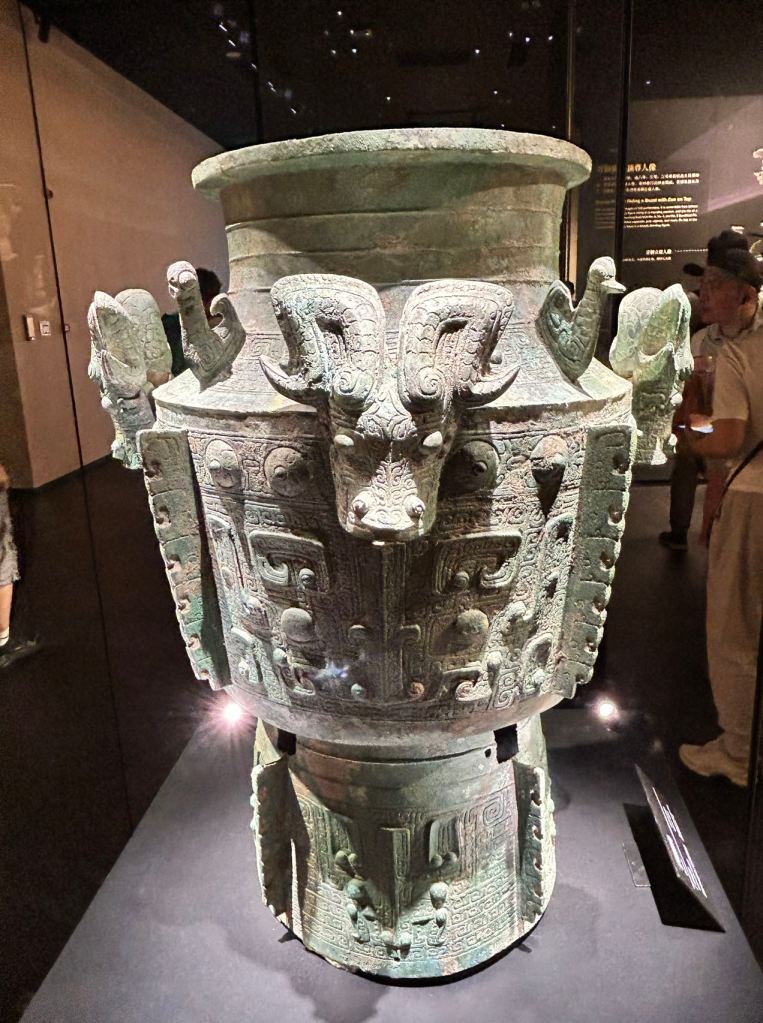
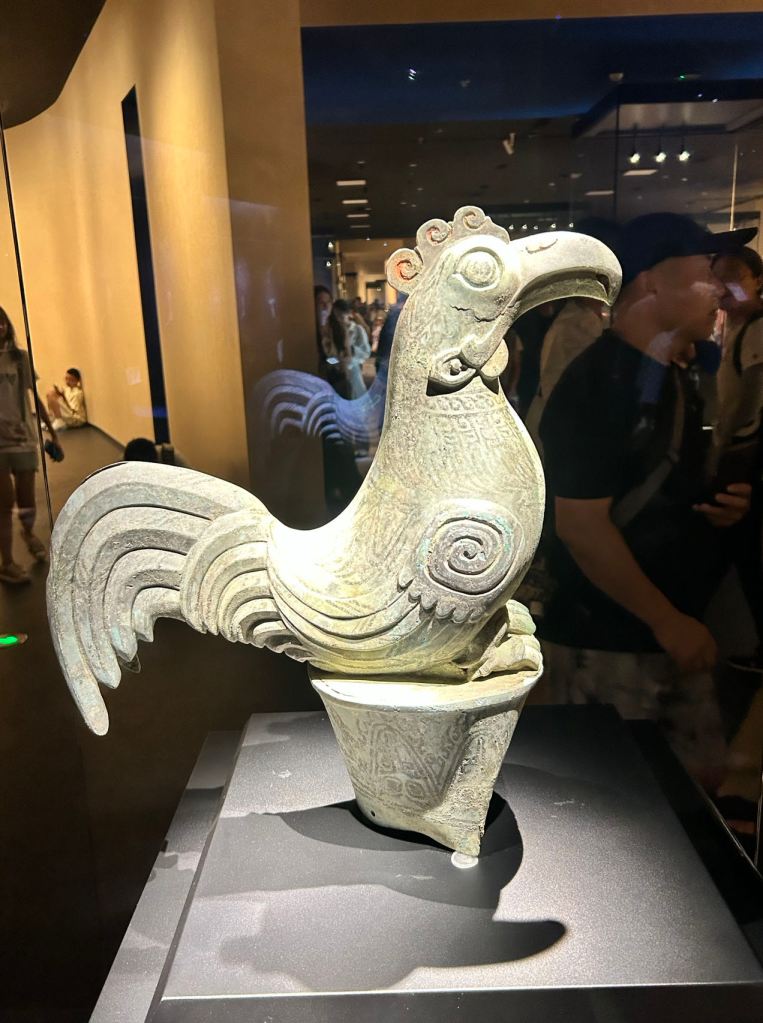
The ancient city of Chengdu is the capital of Sichuan Province, covering the area of over 14,335 km² and a length of about 193 km from west to east. This territory has a very venerable and rich history. The archaeological excavations of ancient pyramid of Yangzi Shan 羊子山 in the north suburbs near Sima Bridge have uncovered artefacts dating back more than 9,000 years. Chengdu was the capital of the ancient Shu kingdom, whose history is lost in the mists of time, and evidence of a highly developed, mysterious civilization of twelfth and eleventh centuries BC, very different from the culture of the Chinese central plains, but somewhat similar to Mesoamerican civilizations, can be seen at the Sanxingdui Museum 三星堆. In the year 2000, a later settlement of this society, around the 10th century BC, was discovered on the territory of Chengdu and was named Jinsha金沙. In particular, a golden disk with an image of a three-legged bird on the Sun became a symbol of Chengdu.

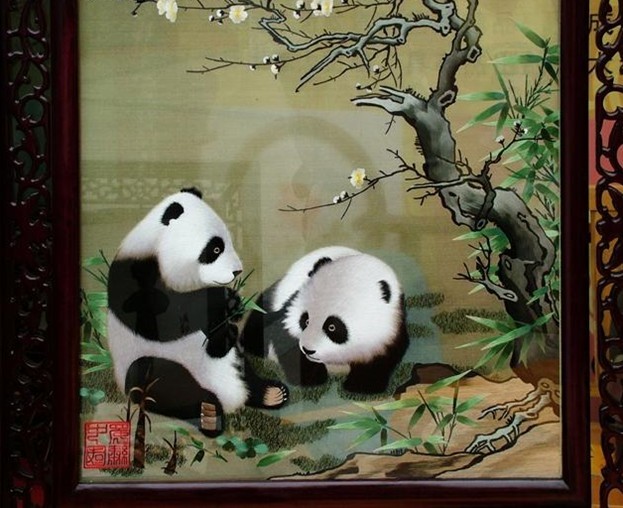
The earliest history of the Shu kingdom is known only from fragments of historical records, legends and myths. The main written sources were destroyed after the conquest of the Shu kingdom by the Qin 秦 kingdom in the 3rd century BC. The character for the Shu kingdom is 蜀(Shu), resembling a silkworm with a big eye. According to legend, the ancient rulers of the Shu kingdom, whose tombs are located in the Wangcong Temple 望从祠, actively developed silk production long before the Qin conquest. Therefore, Sichuan embroidery 蜀绣 (Shu Xiu) is one of the four most famous regional styles of Chinese embroidery, the other three being Suzhou embroidery 苏绣 (Su Xiu), Hunan embroidery湘绣 (Xiang Xiu), Guangdong embroidery 越秀 (Yue Xiu).
The name of the city has not changed for about 3000 years. According to legend, in the 4th century BC someone said, “in the first year to establish a region, in the second – to establish a city.”成都 means “to establish a city”. But these characters can also be translated as “everything comes true”, the motto of the Universiade 2023 was “Chengdu makes your dreams come true”.
The world’s oldest large-scale irrigation project, Dujiangyan 都江堰, is located in the suburbs of Chengdu. It was built by Li Bin in 256 BC, shortly after the conquest of the Shu kingdom by the Qin kingdom and is still in operation today. Nearby you can see the Temple of the City God城隍庙, the Temple of Confucius文庙, the picturesque South Bridge南桥 and the Ancient Street 西街, similar to the Muslim Street in Xi’an, and even has a mosque.

During the Western Han Dynasty (206 BC – 9 AD), the poet Sima Xiangru 司马相如, also known as the husband of a Qionglai native, Zhuo Wenjun卓文君, was born in Chengdu . A monument to their love story can be seen near the Guqin Tower古琴台, where, according to legend, they fell for each other. Guqin Tower Street琴台路is dedicated to the Han Dynasty, and the stone slabs that pave the street are particularly interesting, many of which have bas-reliefs from that time with descriptions. At the Sima Bridge (near the Sima subway station), Sima Xiangru promised Zhuo Wenjun, as he was leaving to seek glory in Chang’an, that he would not return until he could ride back across the bridge on a chariot drawn by four horses (denoting high rank). That bridge collapsed over 2,000 years ago, but a new bridge, Sima Bridge 驷马桥, was built in its place, with sculptures of a carriage drawn by four horses. In Qionglai, there is a classical garden, Wenjun Well文君井, where you can drink the once-famous Wenjun wine文君酒, and watch scenes from the lives of Zhuo Wenjun and Sima Xiangru.

According to legend, in the Eastern Han Dynasty (25-220 AD), the Baoguang Temple 宝光寺 was built, with a “leaning pagoda” similar to the Leaning Tower of Pisa. People come here to make a wish; if they reach the character 福 with their eyes closed, their wish will certainly come true.
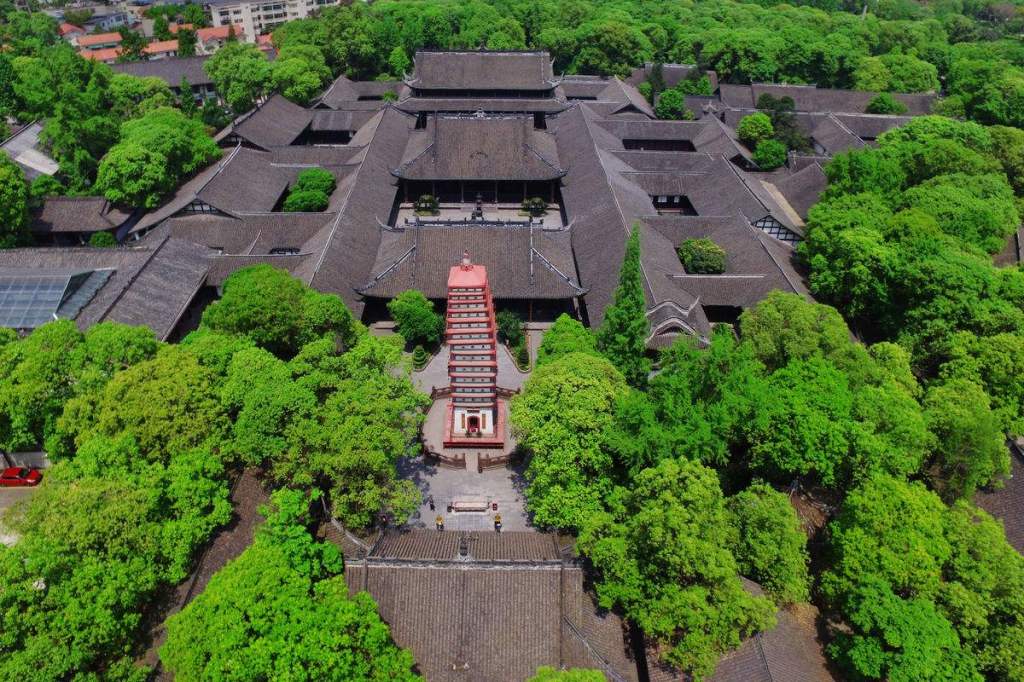
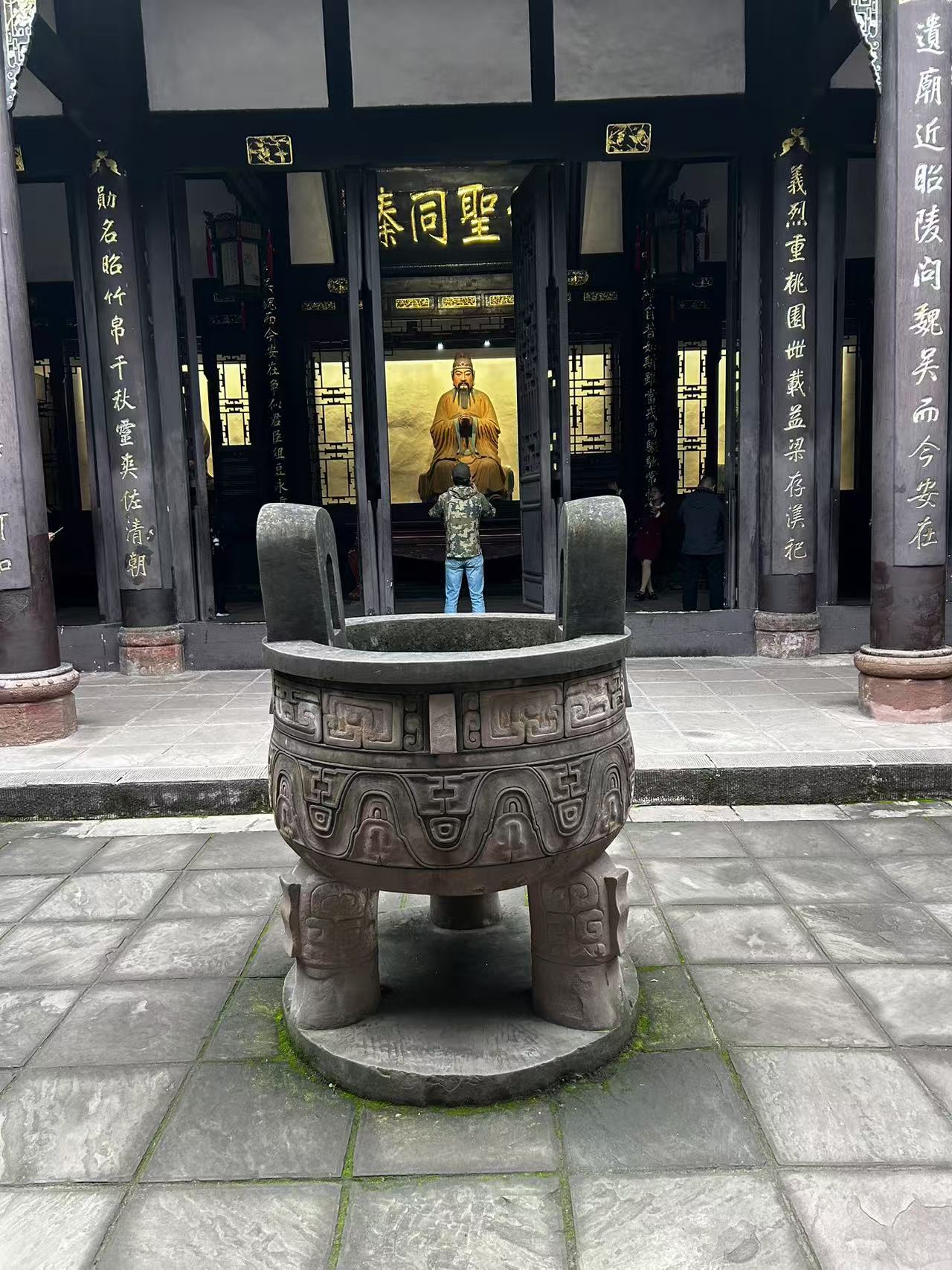
But the most famous period in Chengdu’s history was probably the Three Kingdoms period (220-280 AD), when, after the fall of the Han Dynasty, China was divided into three kingdoms, Wei (capital Luoyang), Wu (capital in the area of modern Nanjing) and Shu Han (capital Chengdu). This is one of the most interesting and tragic periods of Chinese history for ordinary people, which gave birth to many outstanding heroes and politicians. I highly recommend watching the 2010 series “Three Kingdoms”. In Chengdu, in the Wuhou Temple 武侯祠 dedicated to the famous strategist and prime minister of the Shu state, Zhuge Liang 诸葛亮, and there is the tomb of the first emperor of the Shu Han state, Liu Bei 刘备. Next to the temple is the bustling and picturesque ancient shopping street of Jingli 锦里古街.

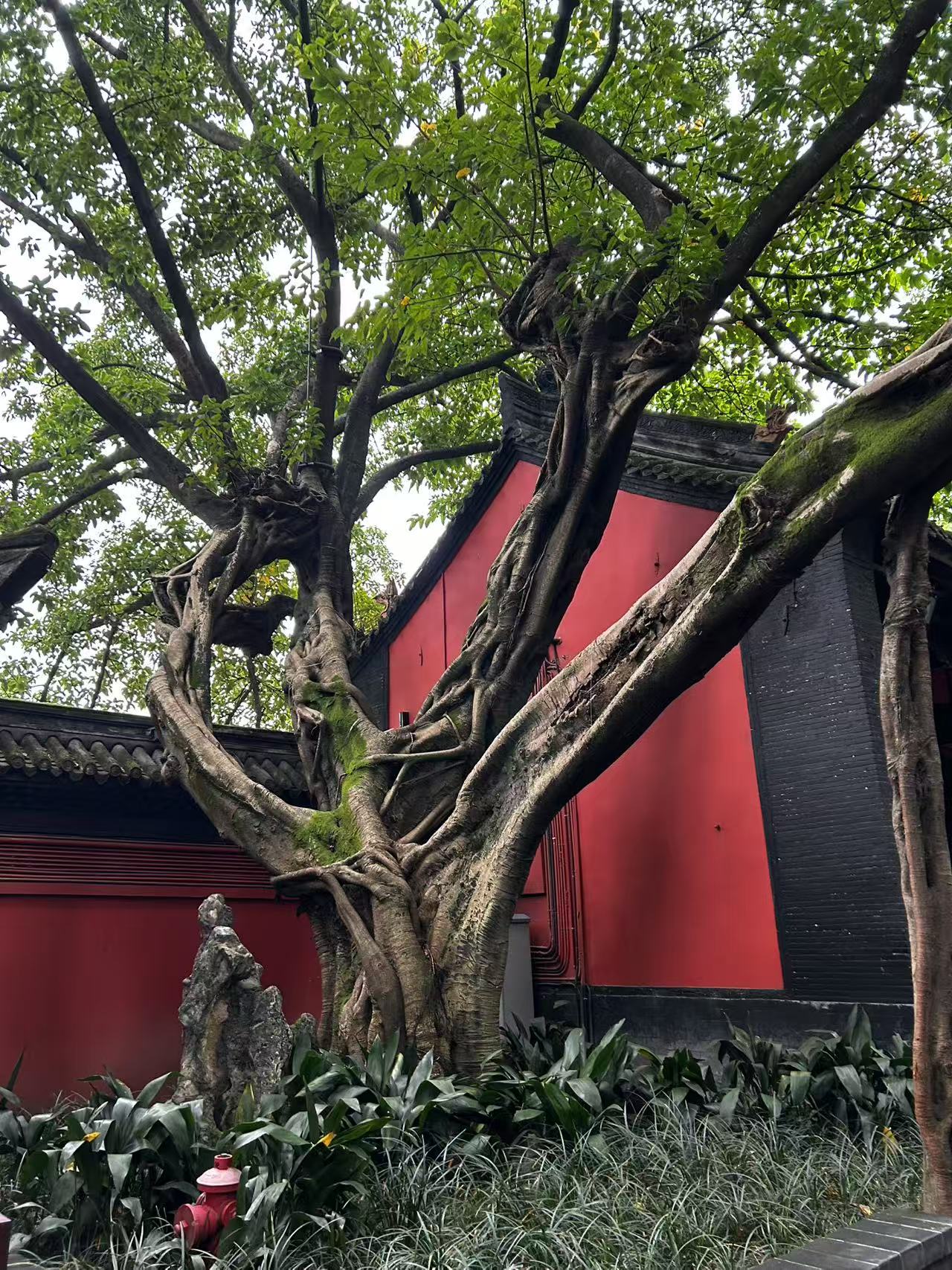
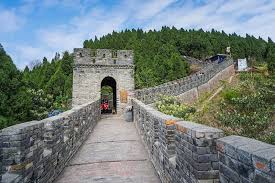
Longtan Temple龙潭寺 is associated with Liu Bei’s successor . According to legend, he bathed in a pond near the monastery and even the tree where he hung his clothes has been preserved. Nearby, a very beautiful ancient street Longtan Shuixian龙潭水乡( Longtan Water Park) . And also the ancient town of Luodai 洛带古镇, which got its name from the heir’s jade pendant dropped in a pond. A copy of the Great Wall of China, Jinlong Great Wall 金龙长城 was built nearby in our time and offers beautiful views of the surrounding area.
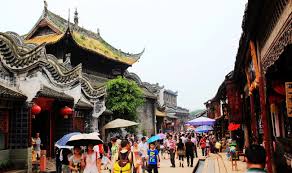
The Wenshu Monastery 文殊院 was first built during the Daye period of the Sui Dynasty (605-617 AD) by the favored concubine of Yang Xiu, the son of Emperor Wen of Sui, the Prince of Shu, it was then called Xinxiang Temple. Although this place became famous during Kangxi era of Qing Dynasty, when the monk Cidu, believed to be incarnation of Bodhisattva Manjushri lived there. Behind Wenshu Monastery a small Taoist temple of Liu Bei’s ancestors 蜀汉广生宫古娘娘庙道观 is located since the time of the Three Kingdoms, which a very few people know about.
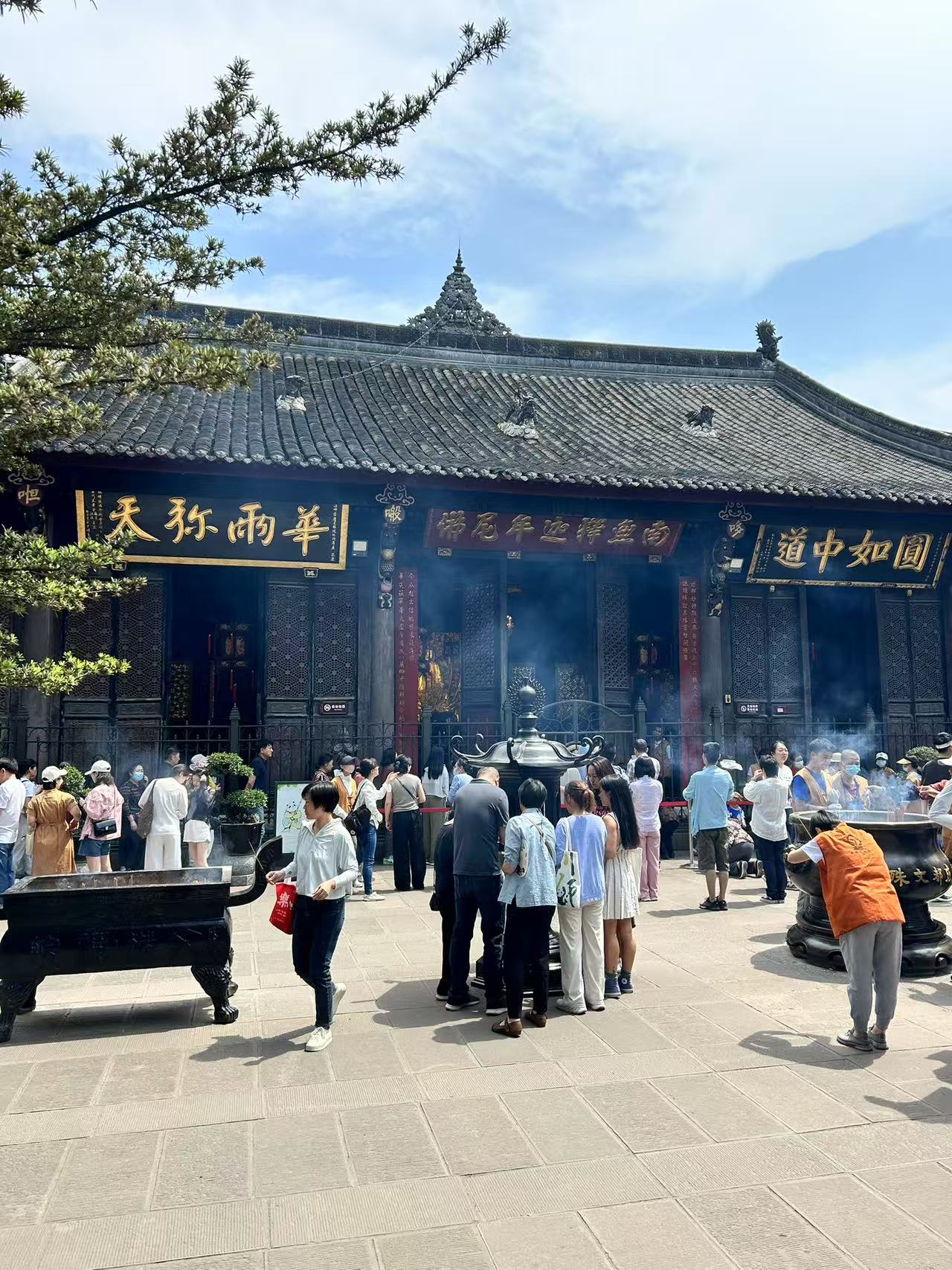
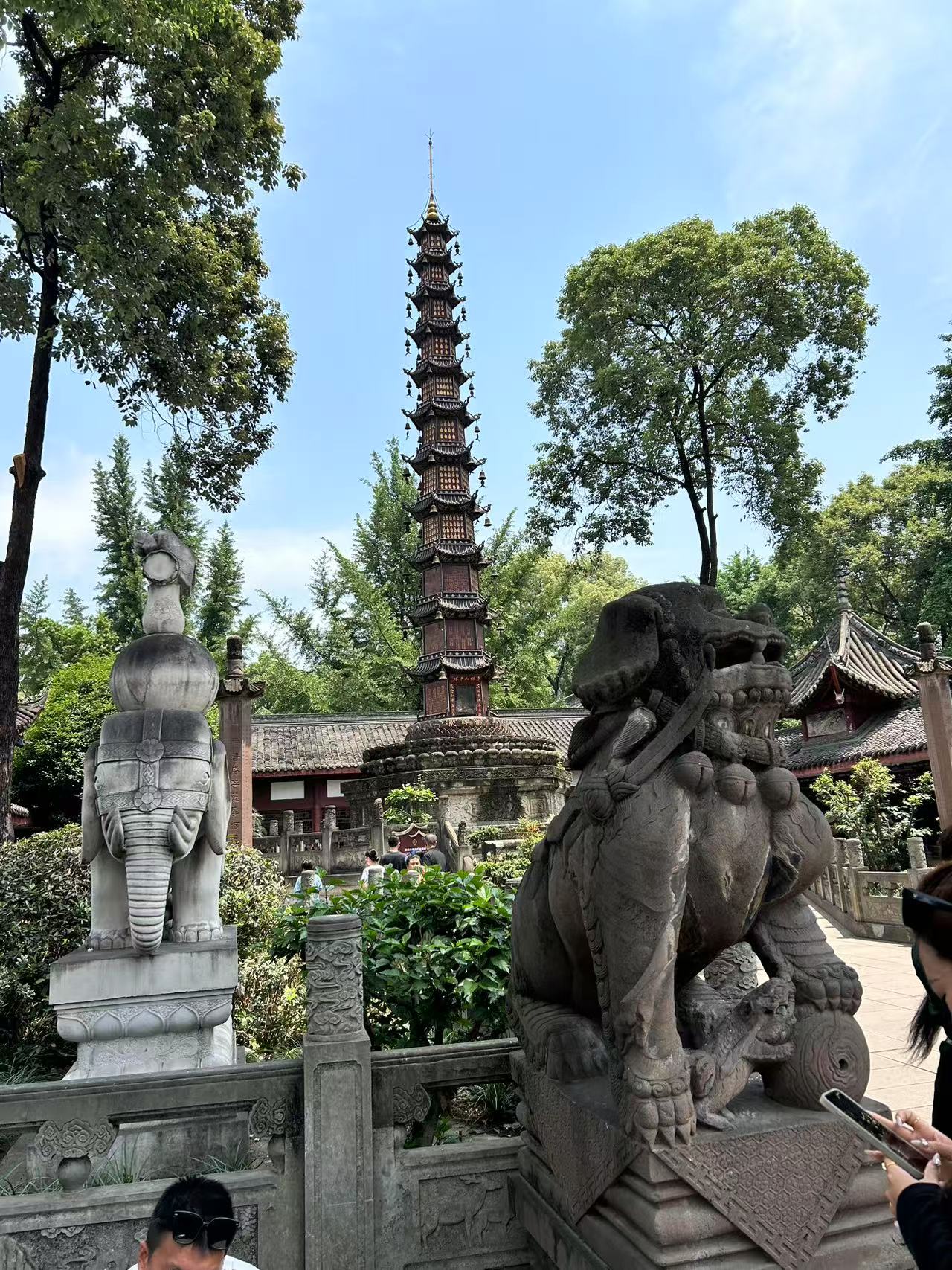
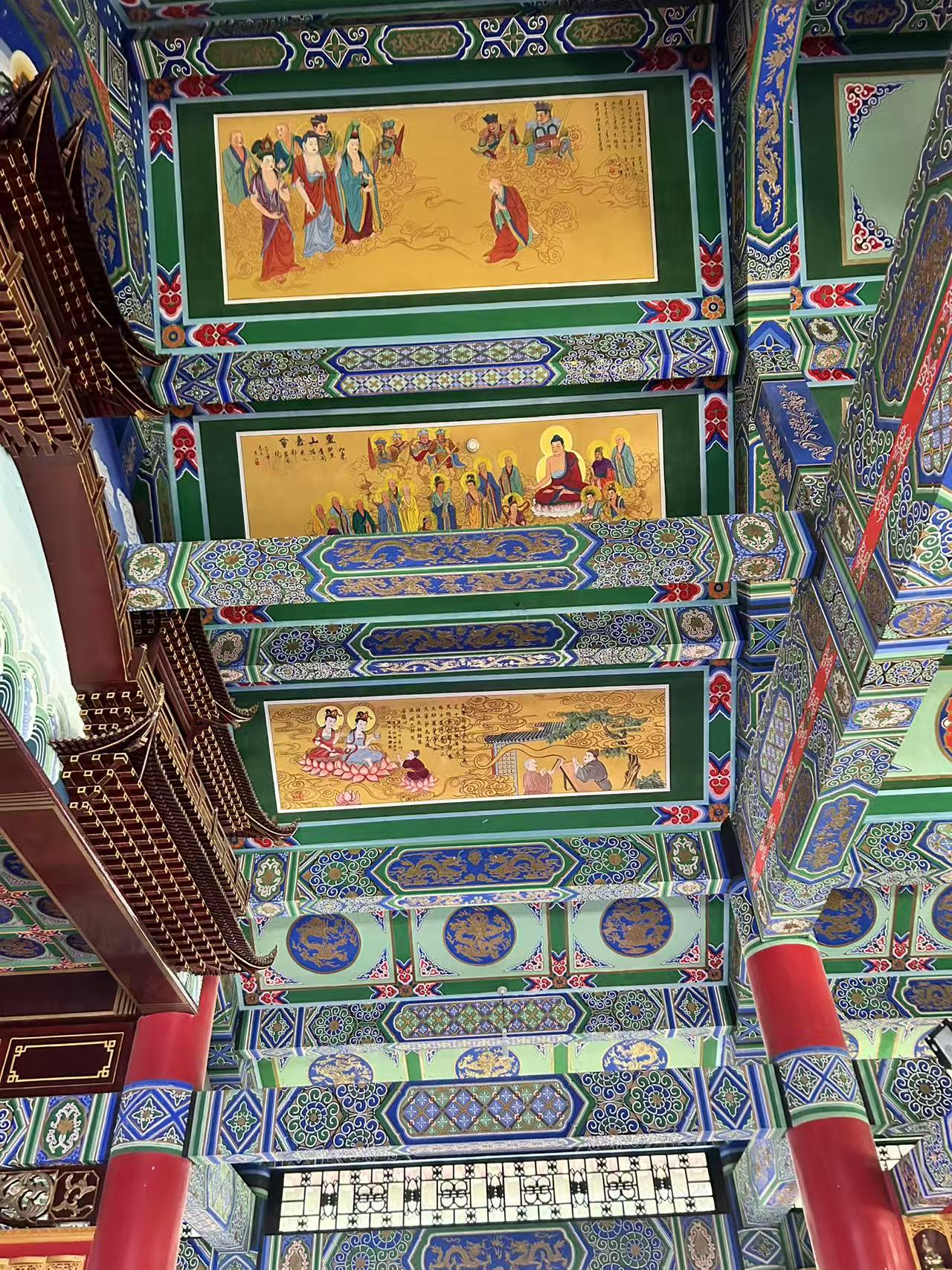
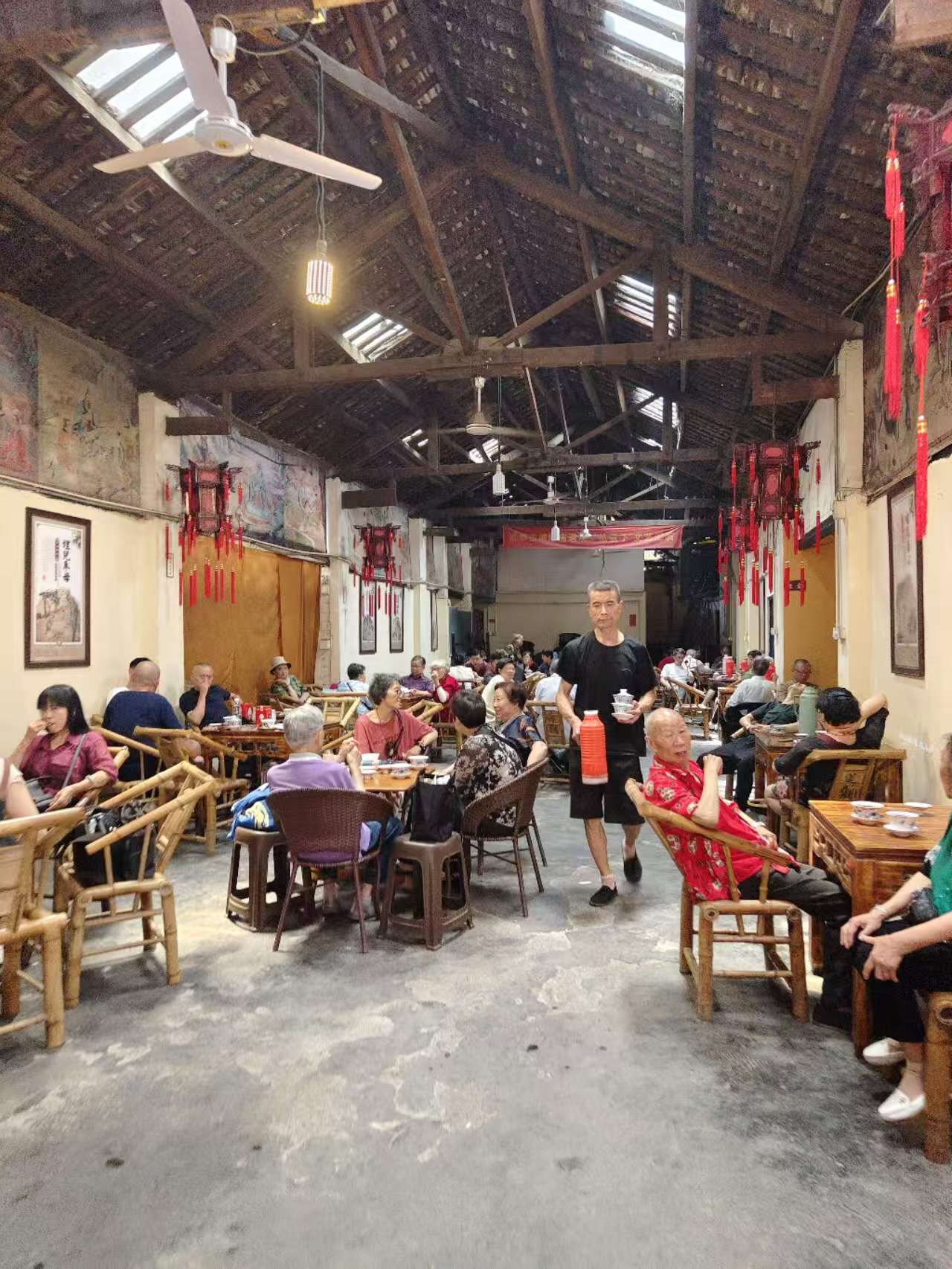
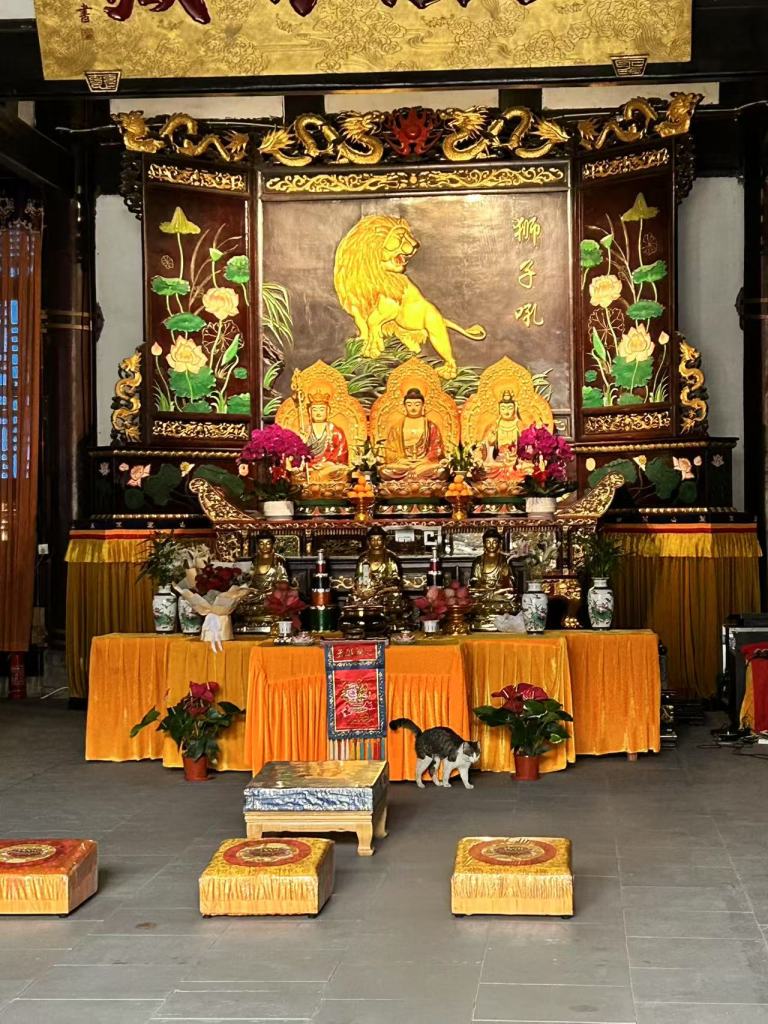
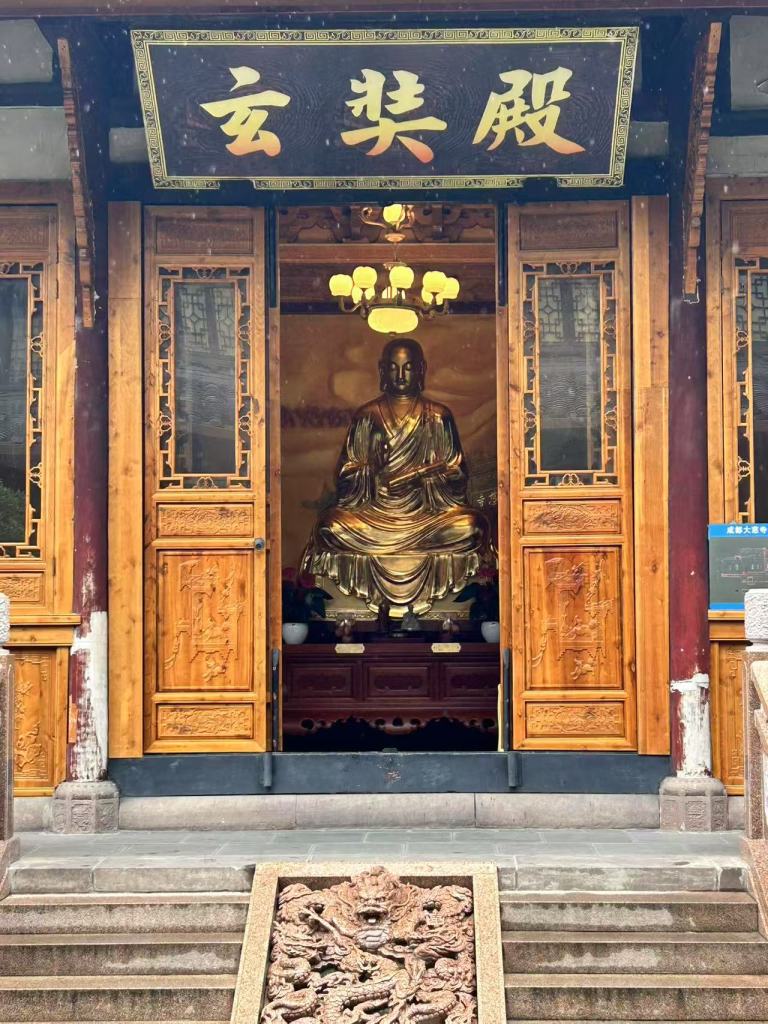
During the Tang Dynasty (618–907 AD), Chengdu was a wealthy city. The ancient Daci Temple大慈寺 is located in the center of today’s Taikooli太古里 shopping district. It was here that the famous Tang Xuanzang, one of the main characters in the ancient Chinese novel Journey to the West, was ordained as a monk. Incidentally, the Daenci Temple大恩慈寺 in Xi’an, with its Big Wild Goose Pagoda, was built after the Daci Temple, when Xuanzang returned with a rich collection of Buddhist sutras.

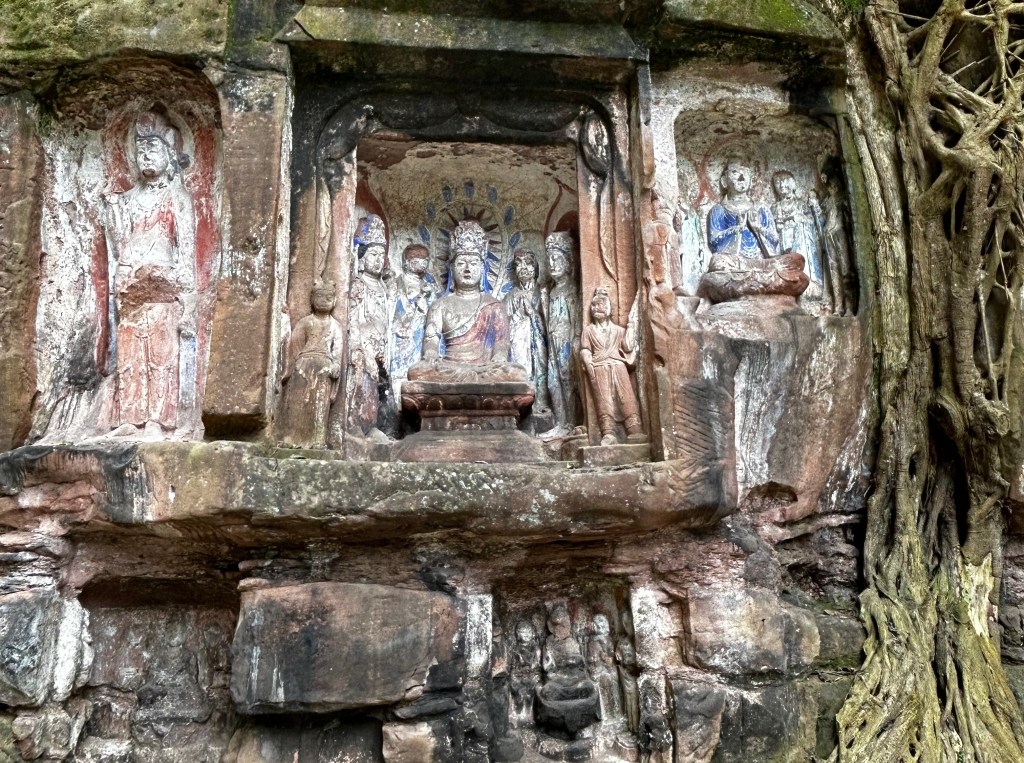
Wu Zetian’s Zhou dynasty (690-705 AD) commemorated in Chengdu by very distinctive Longxing Temple 龙兴寺 in Pengzhou and Feixian Pavillion飞仙阁, amazing Buddhist art grottoes in Pujiang, one of the groups depicting Wu Zetian herself with her court.
But Chengdu flourished especially in the latter half of the Tang reign, when the dynasty was in decline. During the An Lushan Rebellion (755-763), the aging Emperor Xuanzong was forced to flee from rebel troops and wandered for a long time around Sichuan Province. When he regained power, many of the temples in Sichuan where he had sought refuge were greatly expanded and richly decorated, in particular, Qingyang Gong 青羊宫 the largest Taoist temple in Southwest China was elevated to the status of “palace” and one of the largest Buddhist temples in Chengdu Zhaojue Temple 昭觉寺, was built.
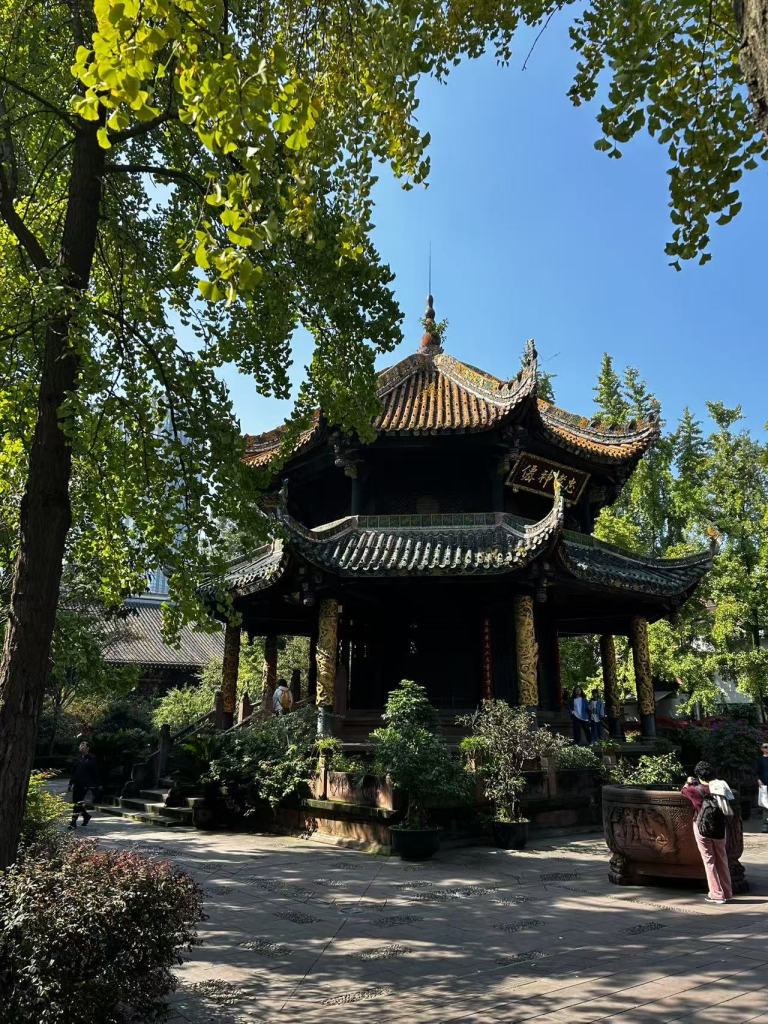
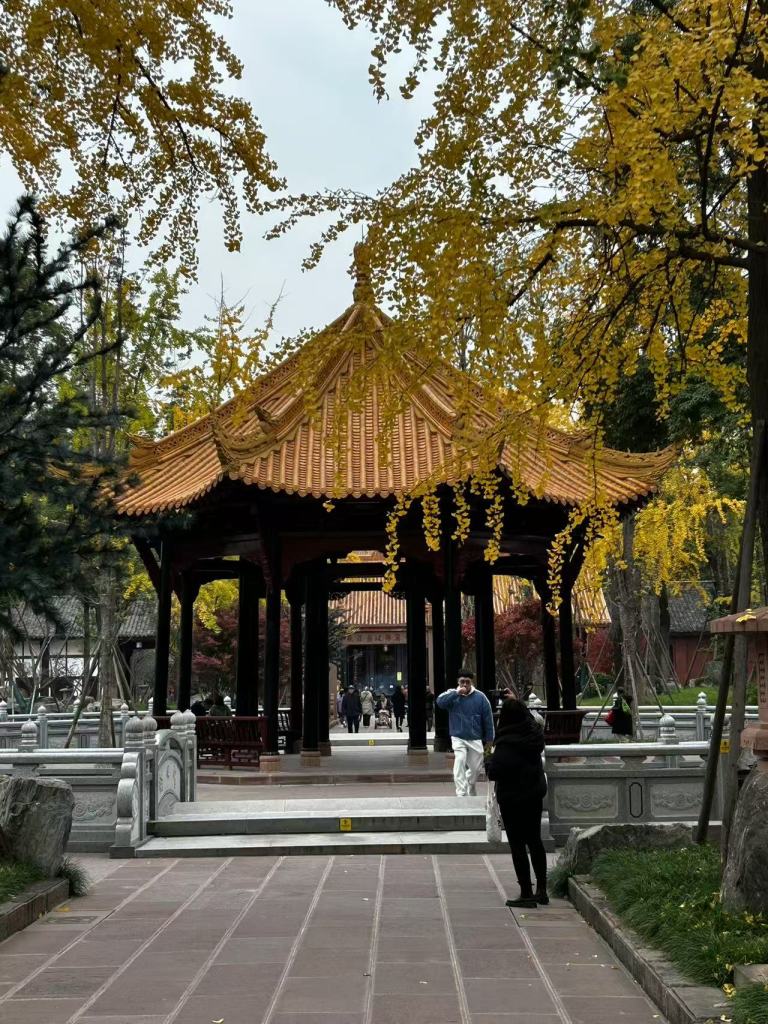
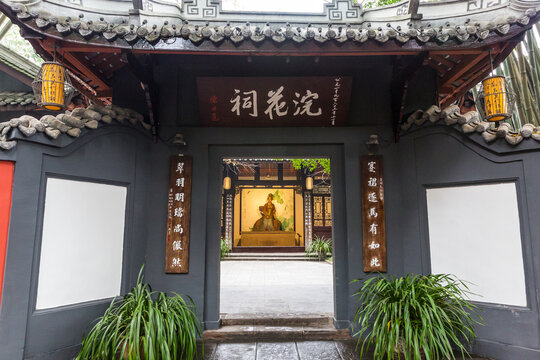
Chengdu sheltered famous Tang Dynasty poets who fled war-torn Chang’an (Xi’an). Li Bai and Du Fu lived here for quite a long time, in Du Fu’s Thatched Cottage 杜甫草堂 you can see the remains of buildings from the Tang Dynasty. In the same complex, there is a chapel dedicated to Madame Huanghua 浣花夫人, who defended Chengdu during the civil strife of the Tang Dynasty. Chengdu was also home to the talented poetess Xue Tao 薛涛, who not only wrote poetry but also made her own paper for love letters. Her tomb is in Wangjiang Lou Park 望江楼, on the banks of the river with the romantic name of Jingjiang (Brocade River).
After the collapse of the Tang Dynasty in 907, Chengdu became the capital of the Later Shu kingdom under Emperor Wang Jiang 王建 (847 – 918). This dynasty was short-lived, ending with his son, but Yongling Mausoleum 永陵 is the only above-ground imperial tomb in China open to the public.

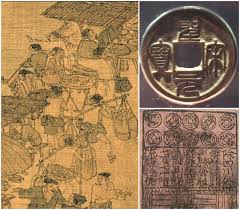
Few people know that the first paper money, Jiaozi, was printed in Chengdu in the 10th century AD during the Song Dynasty (960-1279). That’s why one of the largest parks in the financial centre in the south, next to the Twin Towers in Financial city, is called Jiaozi Park交子公园.
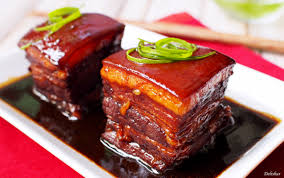
The Song Dynasty produced many famous poets, in particular, Meishan native Su Shi苏轼, better known by his nickname Su Dongpo苏东坡, was not only a famous poet but also an architect who designed several bridges in Chengdu and the author of the famous recipe “Dongpo pork”东坡肉, which can be tasted in Chengdu. And the house-museum where Su Dongpo was born, also dedicated to his brother and father, also famous poets, is located in Meishan, Temple of the Three Su三苏祠.
During the Ming (1368-1644) and Qing (1644-1912) dynasties, many temples in Chengdu were rebuilt and acquired their current appearance. The ruins of the ancient Jinju Temple, which was destroyed during the wars, were used to build the Anshun Bridge 九眼桥, which is beautifully illuminated in the evening, and you can take a boat ride to enjoy the colourful view. You can also see the illuminated Hejiang Pavilion 合江亭 (built in the Ming Dynasty) there, where all newlyweds in Chengdu try to take their photo. This is where two rivers merge into one. Chengdu’s Wedding Hall (the registry office) is just across the street. The traffic light and pedestrian crossing with hearts look very unusual. Those interested in the history of Chinese baijiu liquor can visit the excellent Shuijingfang Museum 水井坊博物馆 and try wine from this winery, which is about 600 years old.


Unrest and the Opium Wars brought the once-rich city to its knees. But when the Qing Dynasty fell, Chengdu boomed again. Wealthy landowners developed their own distinctive Sichuan architectural style, which can be seen in the Broad and Narrow Alleys 宽窄巷子, bustling shopping streets that recreate the atmosphere of Chengdu in the early 20th century.
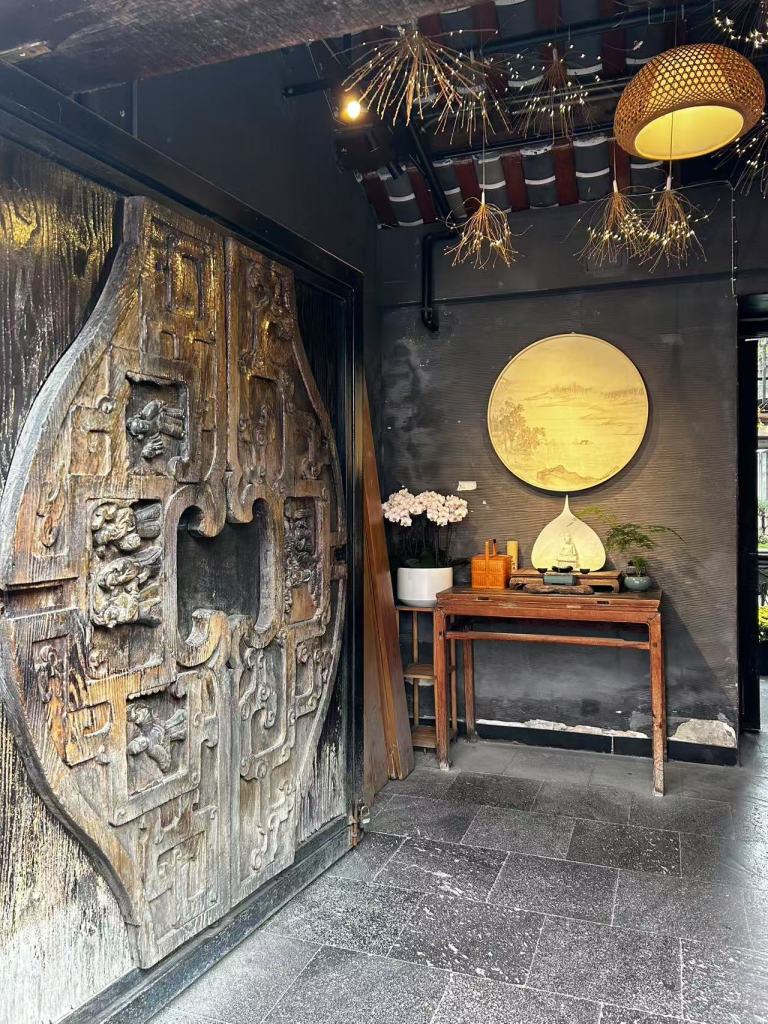
In the 50s and 60s, Chengdu was one of the industrial centres, with many factories that later turned into industrial slums. However, some were rebuilt into loft parks. A great example is the Dongjiao Memory, 东郊记忆 (Eastern Suburbs).
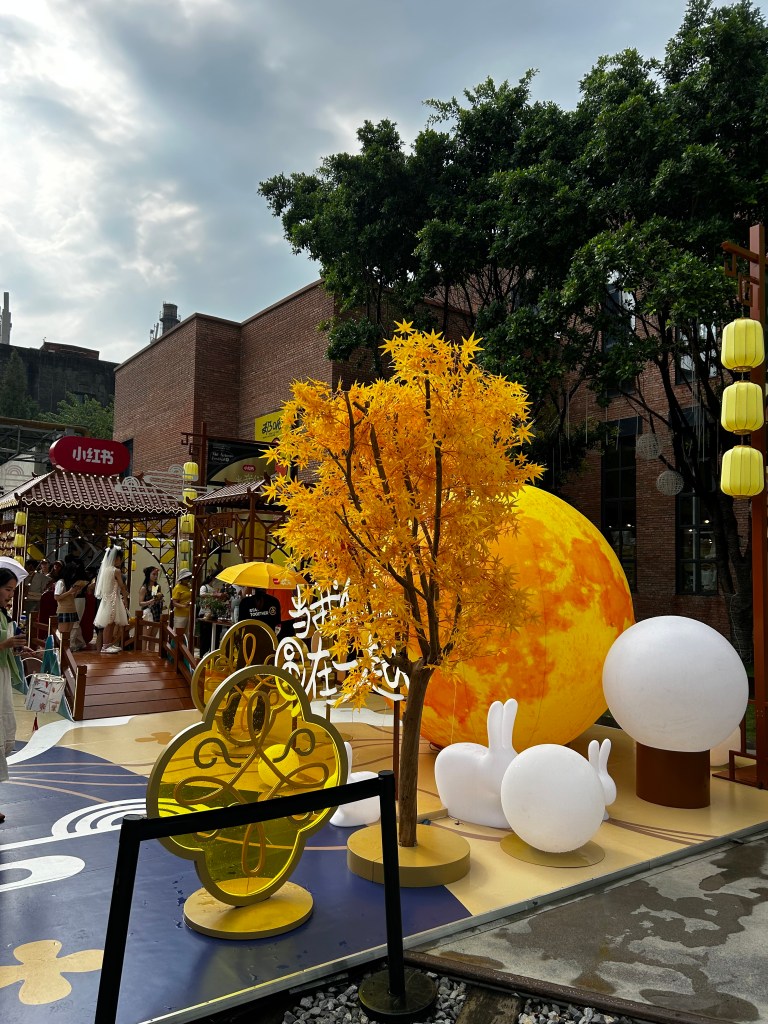
Among the museums worth visiting are the Chengdu Museum 成都博物馆, the Sichuan Museum 四川博物馆, the Natural History Museum (with dinosaurs) 自然博物馆, and the Sichuan Cuisine Museum 川菜博物馆.
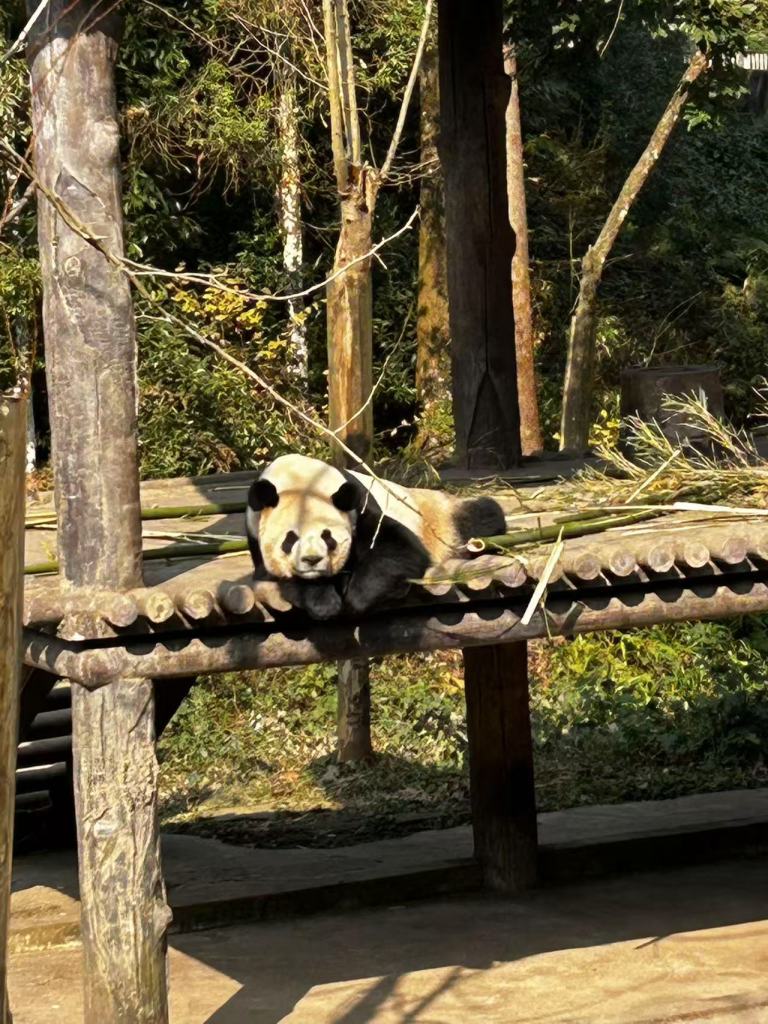
Modern Chengdu is best known as the city of pandas. Not far from the city center is the most popular Chengdu Great Panda Research and Breeding Base 熊猫基地. Pandas are one of the symbols of China. It is best to go there early in the morning, while the bears are gnawing bamboo and have not yet gone to rest after such hard work. By the way, if you go to Dujiangyan, there will be a much more attractive Panda Reserve 熊猫谷 there.
Welcome to Chengdu!
Helena Avdjukevica
 Walk with the Dragon