
North, Qingbaijiang 青白江区
Chengxiang Ancient Town 城厢古镇 (search for Localand on the map)
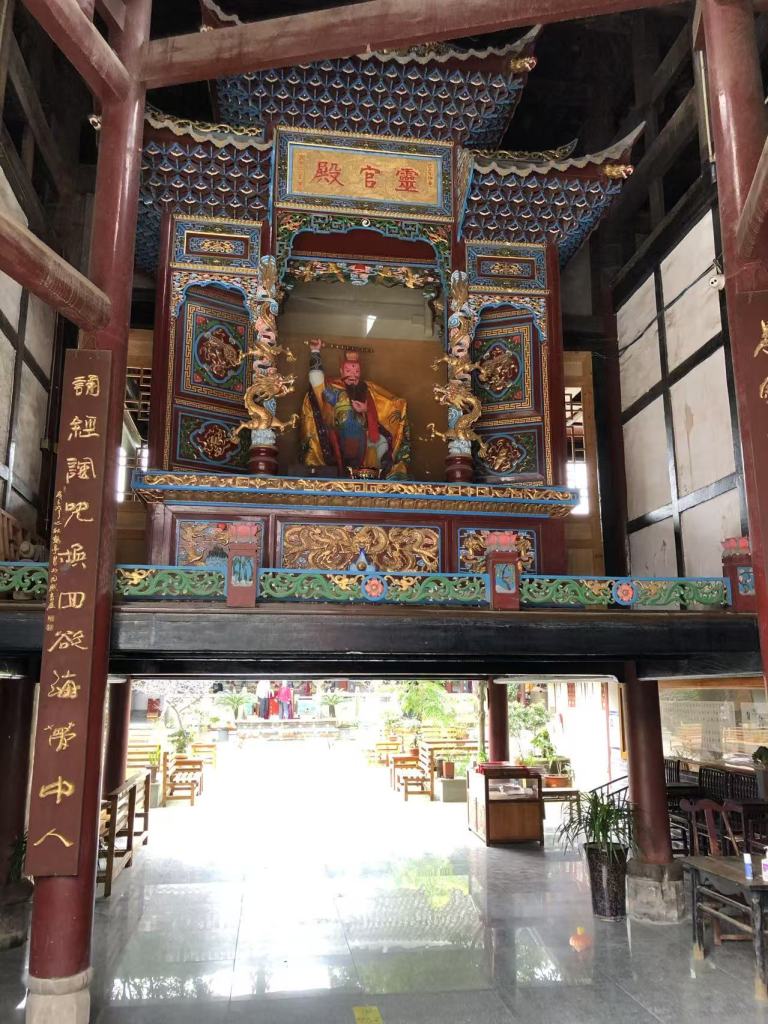
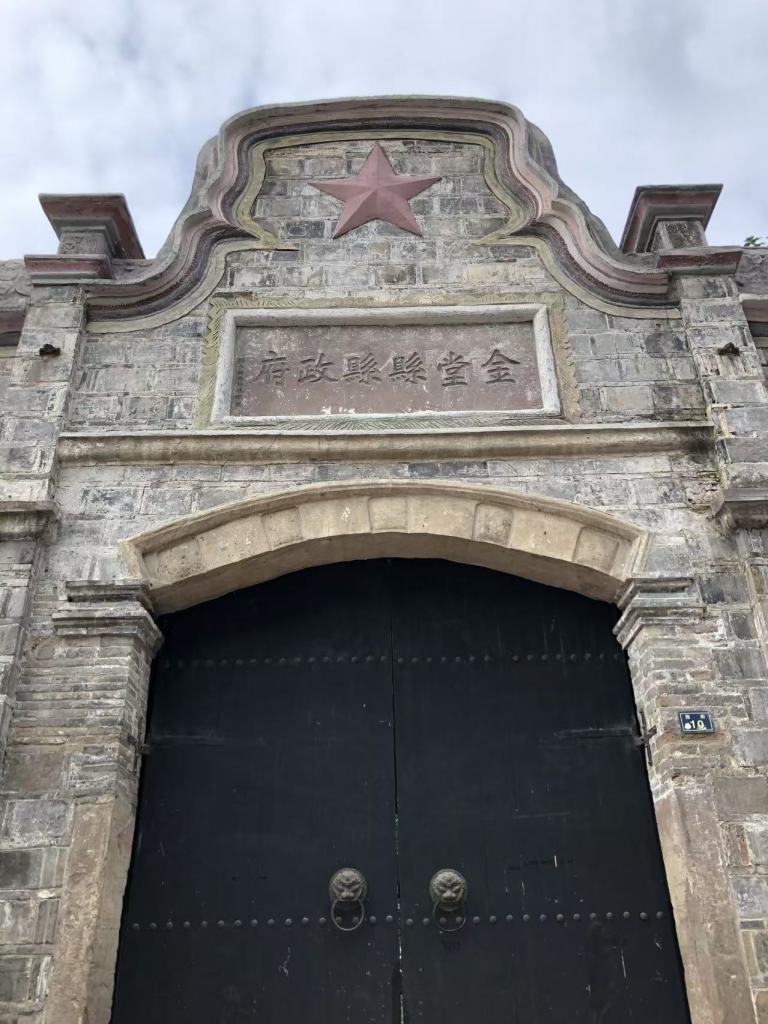
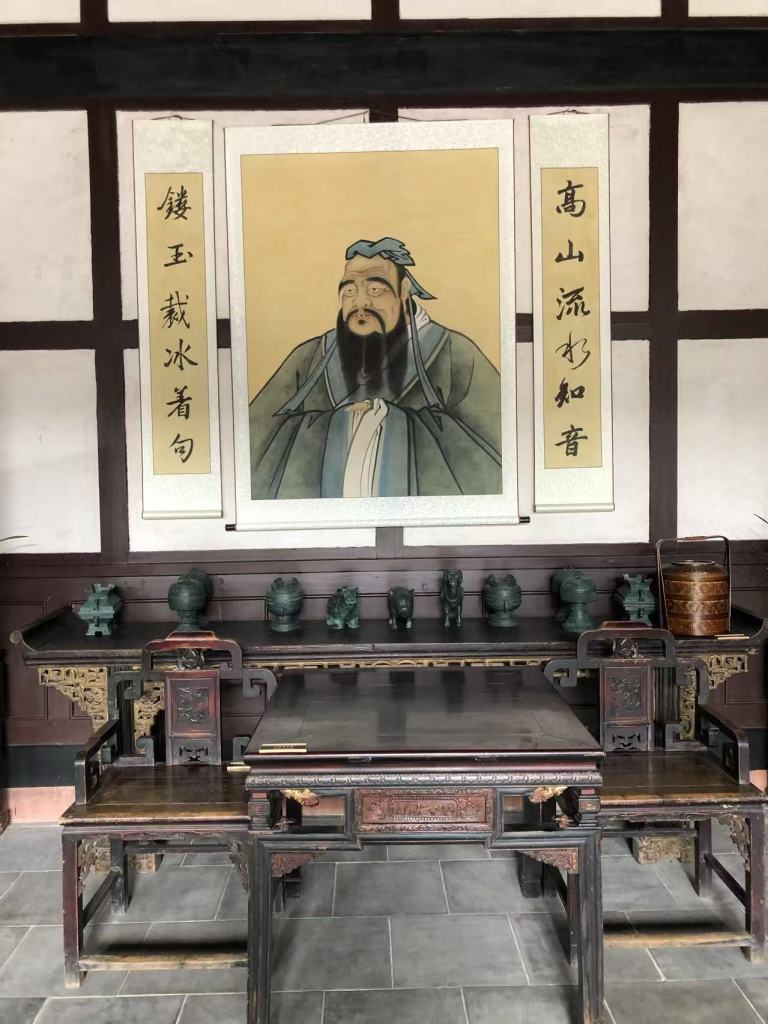
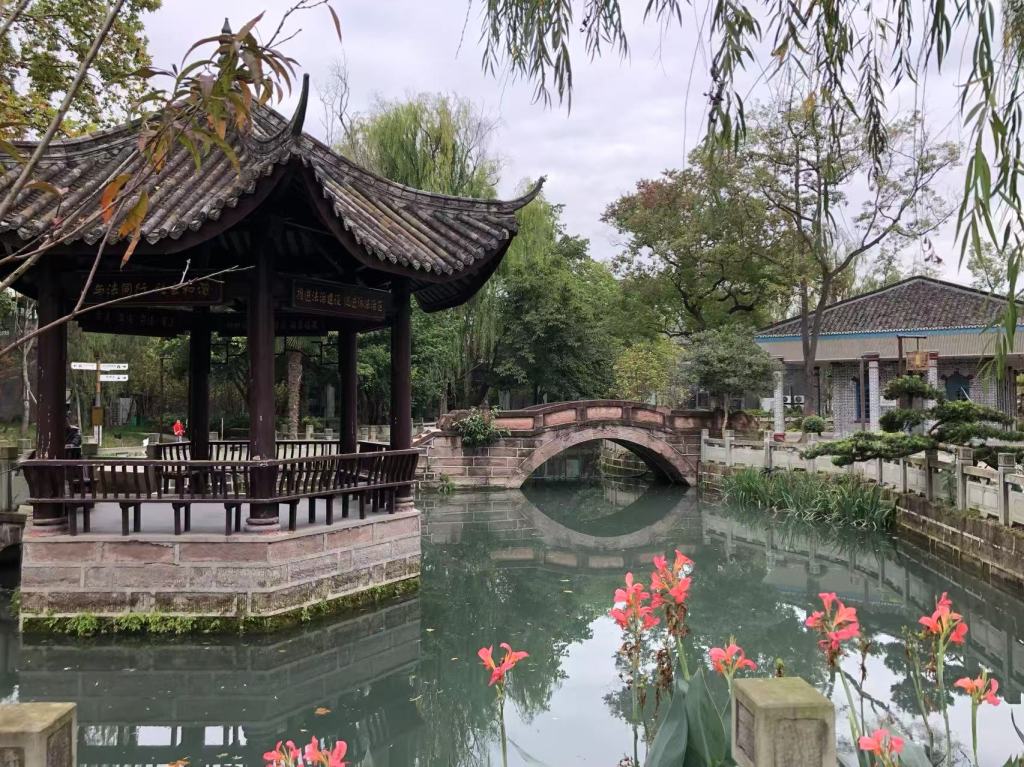
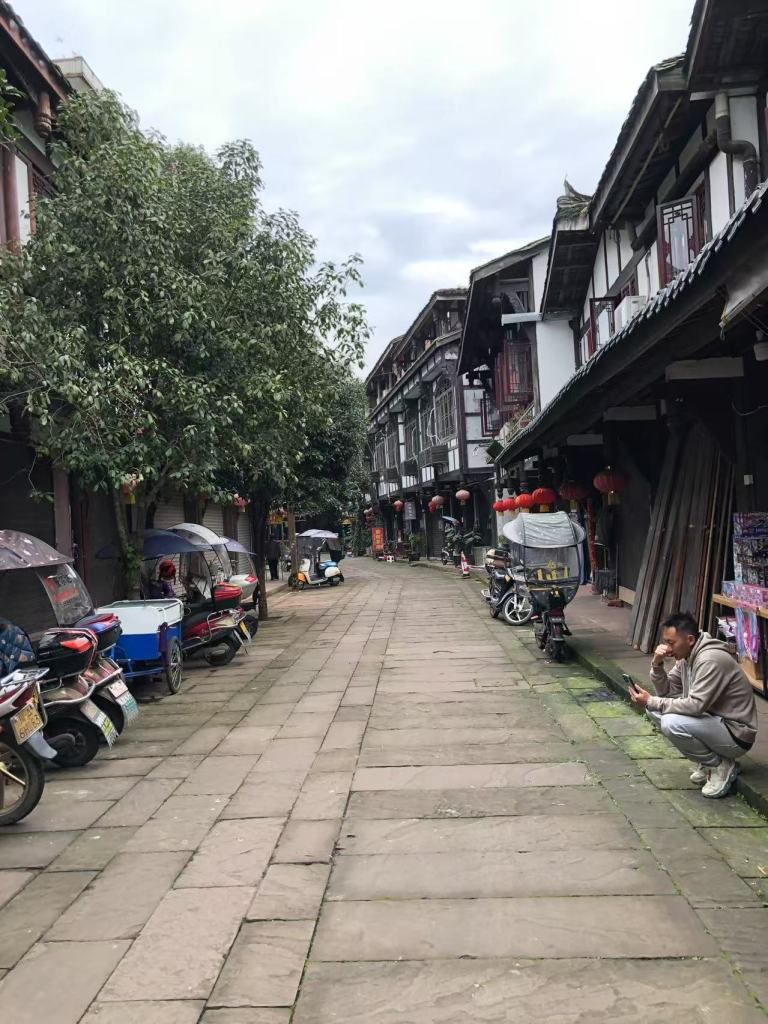
Well worth visiting. Old part of Qingbaijiang area in the Northern Chengdu. Very nice ancient streets with some temples and authentic atmosphere and restored houses. To this day, it still retains numerous cultural relics such as the Qing Dynasty Hakka style Chen’s Ancestral Hall, Xiuchuan Academy, and famous temples. With a profound historical and cultural heritage, it is the largest urban renewal cultural and tourism ancient town project covering the entire area in northern Chengdu.
Chengxiang Ancient Town has a history of 1600 years of establishment and 1400 years of county system, with four main streets, 32 alleys, and 64 cultural courtyards arranged. Moats, academies, Confucian temples, martial temples… It currently has 6 provincial-level cultural relics protection units, more than 10 ancestral temples, and more than 30 historical and cultural landmarks, inheriting the county governance pattern of the Song Dynasty turtle back system. It is the living sand table of the old Chengdu and is known as the “Little Chengdu”. It is a historical and cultural town in Sichuan Province, and also the only ancient town in Chengdu that inherits the millennium old county governance pattern.
North-West, Pengzhou 彭州
Haiwozi Ancient Town 海窝子古镇
Worth visiting Haiwozi Ancient Town. One of the ancient Shu kingdom capitals, located on the border of Pengzhou and Dujiangyan. Has amazing Shu King statue, overlooking beautiful scenery. It has just two streets, was severely damaged during 2008 earthquake, now fully restored, although there are some ancient houses as well. Can visit on the way to Bailu French town.
Bailu Musical Town白鹿音乐小镇 and French Monastery 上书院
Unlike other traditional Chinese towns, Bailu is integrating Chinese and French architectures to become “a small town of traditional Chinese and exotic French styles”. Located about 70 km north of downtown Chengdu, Bailu is a town of 10,000 residents in about 3,000 households living in an area of 78 square km in size.
In 2008, the small town had been nearly destroyed. About 90 percent of the area’s houses, 17,000, collapsed or were in ruins. Sixty-eight people and 1,123 others were wounded. The direct economic loss amounted to 1.4 billion yuan.
The core blocks of Bailu town contain two 800-meter-long streets. To the south of the streets are residential quarters featuring French architecture with high, pointed roofs and vaulted lattice windows. Some buildings have the appearances of ancient castles. To the north of the streets are buildings of traditional Chinese style. They combine to constitute the setting of “traditional Chinese and exotic French styles” More than 400 families live in the quarter. Bailu based its development on embracing its unique advantages as a positive way to create a strong foundation for future economic development. With a history of more than 1,000 years, Bailu boasts rich mineral resources, a gentle climate and up to 71 percent forest coverage. In summer, many residents of Chengdu come to Bailu to avoid summer heat.
Deciding to embrace a combination of Chinese and French influences in rebuilding the town, Bailu drew on its close relationship with French culture that spanned more than 100 years. About 110 years ago, Gubulan, a French missionary, came to the town and built Shangshuyuan, a Roman Catholic college. The college campus, 18,000 square meters in size, became an architectural landmark in the town. The college was listed as a cultural relic under State protection. Many engaged couples traveled to Bailu to have their pictures taken in front of the pretty building.
Bailu: a post-quake success story|Chengdu Experience|chinadaily.com.cn
West, Pidu 郫都区
Tangchang Ancient Town 唐昌古镇
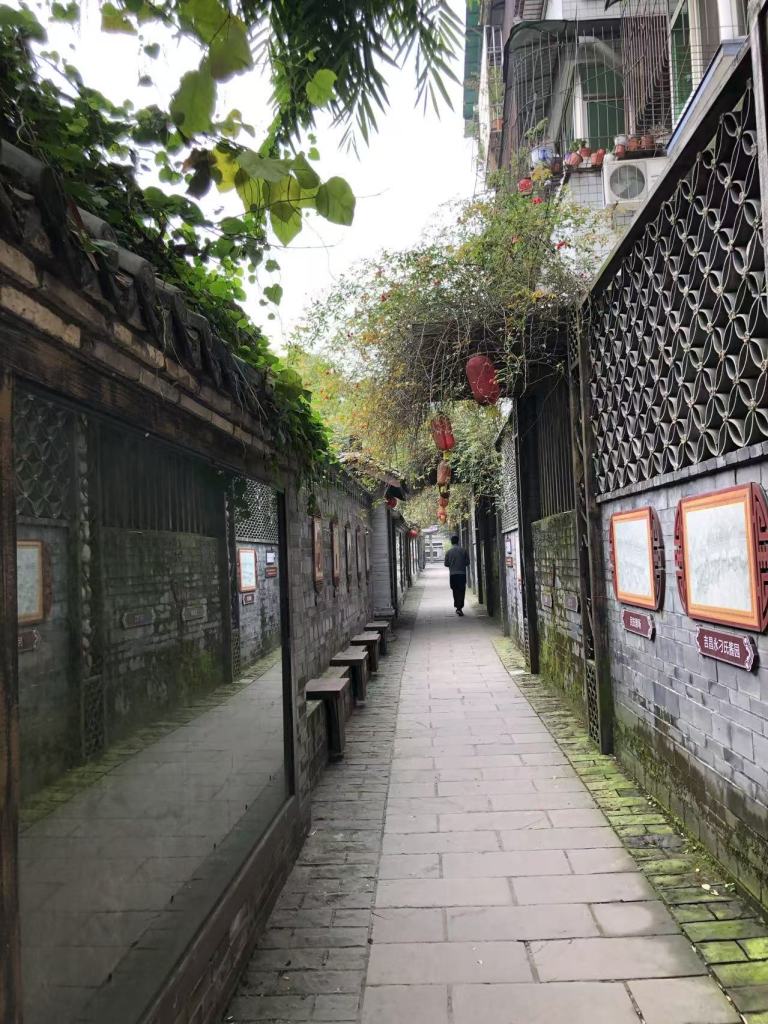
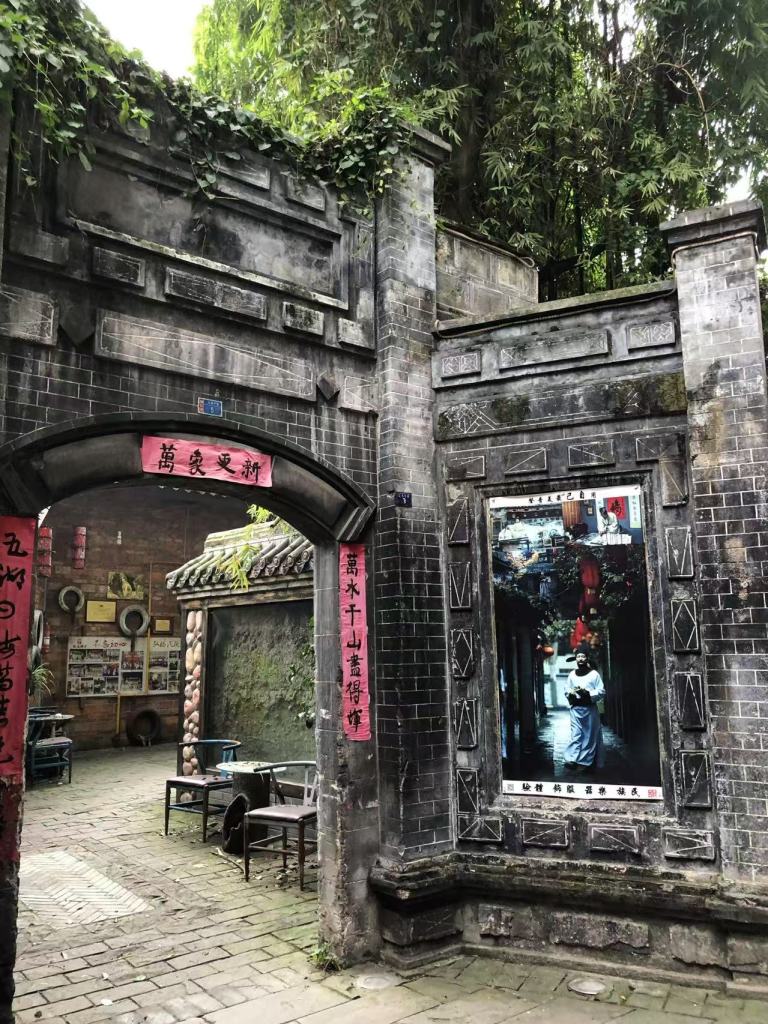
Worth visiting ancient town, located in Pidu District. I love local food – do not go to fancy restaurant, eat with locals in the street. Tangchang was originally Chongning County, which has a history of more than 1300 years. Today, it has become the unnamed township of Pidu County, Tangchang Town. Perhaps being away from development is part of the reason it can still be retained.
Can see picture here: Tangchang – a crippled ancient city around Chengdu – laitimes
Sandaoyan Ancient Town 三道堰古镇
Worth visiting nice town in Pidu district, not far from Sichuan Cuisine Museum 川菜博物馆. Sandaoyan is an ancient town in Wesern Shu with a history of over a thousand years, known as the “Tianfu Water Town”.
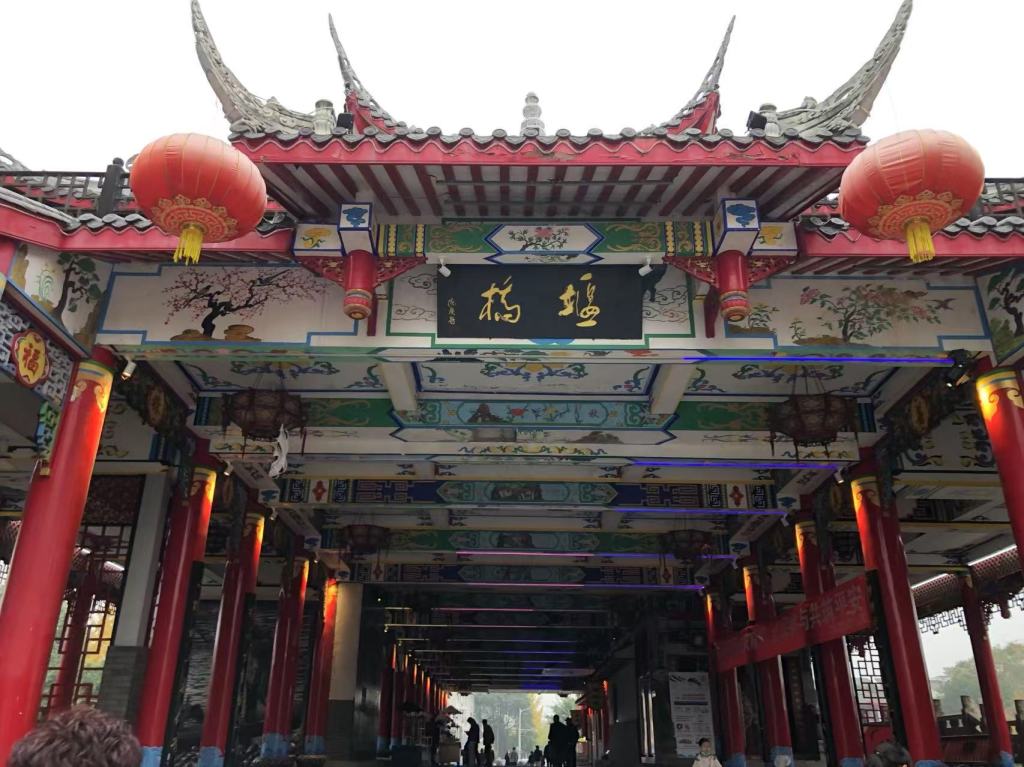
The Xuyan River and Baitiao River pass through the town of Sandaoyan, and the pink walls and black tiles of traditional Western Sichuan dwellings built along the water are intricately arranged, reproducing the rich and varied shapes of traditional Western Sichuan dwellings. Diaojiao Lou, Yuejiang Lou, Wangjiang Lou, Yongding Bridge, Weiqiao Bridge, Sandaoyan Ancient Town memorial archway, and the 1000 meter Watertown Cultural Corridor. The exquisite scenic spots in the small town all showcase the unique charm of the water town in western Sichuan.
West, Dujiangyan 都江堰
Tai’an Ancient Town 泰安古镇
Well worth visiting, located at Qingcheng Back Mountain, picturesque ancient town better be avoided in summer, as the whole Chengdu is going there seeking retreat from heat. Throughout history, the ancient town of Tai’an has been an important post road that must pass through to the west of the Chengdu Plain and into various Jinchuan rivers. Formerly known as “Huaping Laoze Road”, it was called Weijiang Village in the Tang Dynasty. In the Qing Dynasty, it was renamed Tai’anchang after the ancient Tai’an Temple. It is a hub for material exchange between Maowen and Jinchuan in Chengdu, and has always been a gathering place for merchants, with a prosperous market.
West, Dayi 大邑
Yuelai Ancient Town 悦来古镇
Authentic, but very small. Situated in Heming Town of Dayi County, Yuelai ancient Town is a classical ancient town of western Sichuan area. It is not big with only 4 streets. The ancient architecture is mainly in Yuelai Main Street and Heba Street and built between late Qing Dynasty and Republic period. Residential houses that combine Chinese and western architectural influences can be seen here and there and this makes it different from other ancient towns.
The site of the former Palace of Chuangwang, NO 309 Yuelai Street, the Temple of Dr. Zhang in Heba Street and the Tunicoides Bridge built in 1920 are main attractions in Yuelai Ancient Town.
Mutton soup, spicy mutton, steamed dish and mushroom are dishes that are well worth sampling form this area.
Anren Ancient Town 安仁古镇
Although highly rated old town, I personally do not like it. Located in Dayi County. People go to Anren Ancient Town for the special architect which is regarded as Cultural Essence of Architecture in Western Sichuan.
Liushi Mansion is the best-preserved landlord’s mansion in China having area of over 70,000 sq meters. The old mansion is now called Dayi Liushi Zhuangyuan Museum.
Tongqing Tea Houses combine Chinese and western style while the spectacular Mansion of Liu Yuan Wang Xuan and the grand Mansion of Liuxiang are also highlights.
Wencai Ribs, Wenqing Duck webs, fish and stone-milled douhua are all notable local dishes.
Xinchang Ancient Town 新场古镇
Well worth visiting, located in Dayi county. Xinchang Ancient Town, about 60 kilometres away from downtown Chengdu, retains many traditional residences in western Sichuan. Most of the houses in the ancient town were built during the Qing Dynasty and the Republic of China, and the antique old buildings are well preserved.
The more representative ones are Li’s old house, Fulin Society, Catholic Church (have a quest to find it!), Gospel Church, Bishan Temple and so on. During the reign of Emperor Kangxi of the Qing Dynasty, merchants from other provinces gathered in Xinchang Ancient Town. Because of the convenient transportation, it became a prosperous market town for commerce and trade. A large number of provincial guild halls were built in the town. Although the guild halls are no longer there, a large number of antique buildings of the former merchants are still preserved. intact.
There are seven ancient streets and six alleys in the ancient town. The ancient buildings on both sides of the streets and alleys are simple and beautiful, and the row upon row of fire-blocking walls are well preserved. If you are tired of walking in the ancient town, you can sit down by the river and taste the famous food in the ancient town such as “Xinchang Xuewang”, “seesame oil duck” and “meat bean flower”. Every year on the sixth day of the seventh lunar month, there is a grand Bishan Temple Fair in Xinchang Ancient Town. Many villagers will put on ancient costumes and dress up as characters in operas, stand on the table, and be carried by special personnel to parade along the street.

West, Chongzhou 崇州
Huaiyuan Ancient Town 怀远古镇
This ancient town, located in Chongzhou, is only 3 square km in area but has a history of over 1600 years. Though small, it is full of silk shops, teahouses, bamboo weaving stores, oil shops and pharmacy sitting in over 20 streets.
Every odd-numbered day is market day and the town come to life. The most famous products in Huaiyuan are rattan plaited articles, bamboo woven and palm fiber woven products most made by old people in the town. Do not miss the delicious food— Ye’r cake 叶儿粑 when visiting.
Jiezi Ancient Town 街子古镇
Very well worth visiting Jiezi Ancient town sits at the foot of Fengqi Mountain (Chongzhou, not far from Dujiangyan) and is home to 32 old temples. Jiezi Ancient Town is a site combining natural scenery with cultural sights.
In this old town more than 20 relic sites including Guangyan Buddha Hall, Fengqi Shan Scenic Area, Original Forests, the 1000-year-old ginkgo trees, Shanggu Temple and an ancient tower from the Qing Dynasty. The beauty of the town can be seen from Yulong Bridge. Legend has it that Zhu Yunwen, the son of Zhu Yuanzhang, the first emperor of the Ming Dynasty, lived in Shanggu Temple during his mysterious disappearance period.
The most famous local dish is stewed black-bone chicken with yam and stewed pork with yam.
Yuantong Ancient Town 元通古镇
Worth visiting, located in Chongzhou. This nice old and quiet town has witnessed the rise and decline during past 1600 years. On most days, the streets are rather quiet and you can hear your own footsteps clearly. This is very different from other famous ancient towns. Gothic architecture at the street corners of the street tells that this was once a thriving place.
Yang Douhua, Huang Douhua and smoked meat are cheap specialties of local food.
West, Qionglai邛崃
Pingle Ancient Town 平乐古镇
Well worth visiting place southwest of Qionglai, Pingle Ancient Town was born more than 2000 years ago. It has a very romantic story of Zhuo Wenjun and Sima Xiangru, who eloped here. Old Banyan trees, the Baimo River, bluestone-paved street and the bamboo forests make Pingle an attractive and fascinating place to visit.
A highlight of the town is Leshan Bridge built in 1863, which is also known as the first Bridge of Qiongnan. It’s peach-shaped, which is rare in western Sichuan. It is also noted for papermaking workshops. Built along the mountains, there are 74 relic sites of papermaking workshops.
Mutton soup, mushroom, fish and fried chicken with bamboo shoots are main local dishes that worth trying.
Jiaguan Ancient Town 夹关古镇
Worth visiting along with other ancient cities in Qionglai, this ancient town has a very authentic feeling and rich history, stretching back to Three Kingdoms, more than 1800 years ago.
During the Three Kingdoms period, the former land of Jiaguan was occupied by the barbarians. In the Nanhe River, which was covered by water and grass in Qionglai, an iron ox separated Shu from the outside world. Therefore, the barbarians often crossed the river to steal chickens and dogs. Zhuge Liang became angry and used three tricks to catch the barbarians and released them with courtesy. The leader of the barbarians still knew the truth and proposed a strategy to settle the grievances in the Jianghu with just one arrow. What a Zhuge Liang, stepping on the back of an iron ox, bending his bow and setting an arrow, he shot with a “whoosh” sound. This arrow flew westward along the Qionglai Mountains for over a hundred kilometers until it reached Da Jian Lu (Kangding). The agreed boundary is where the arrow fell. From then on, the barbarians retreated to Da Jian Lu, and Jiaguan was under the jurisdiction of Shu.
Datong Ancient Town 大同古镇
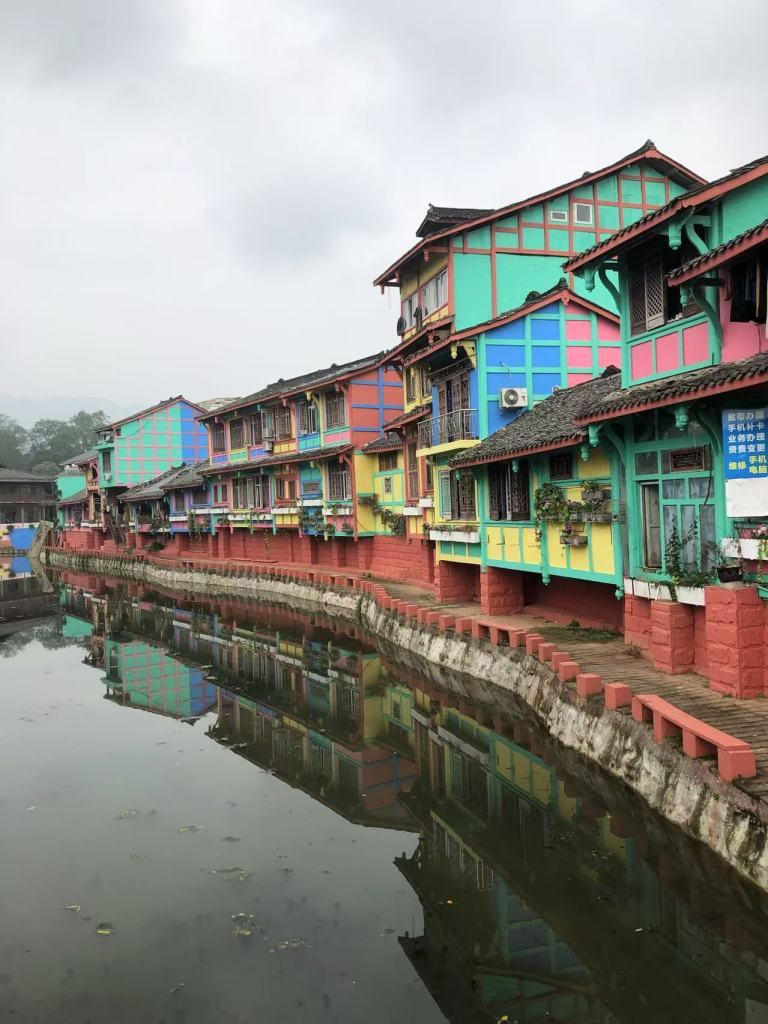
It is also called “rainbow” or “colourful” town. Located in Qionglai county. Not very special, but quite authentic, it is on the way to famous Tang Dynasty Stone Carvings in Shisun Mountain (石笋山石窟)
Huojing Ancient Town 火井古镇
Located in Qionglai, Huojing Ancient Town was first built during the Northern and Southern Dynasties during the Northern Zhou Dynasty (557-581 AD). In the twelfth year of the Daye reign of the Sui Dynasty (616 AD), Huojing County was established, and Yuan Tiangang, a famous mathematician and astronomer of the Tang Dynasty, was appointed as the first county magistrate. With a history of 689 years, Huojing County is a civilized ancient town with a long history of nearly 1500 years. It is recognized as the earliest place in the world to discover and use natural gas, and also the hometown of Huang Chonggu, the first female champion of China.
South-West, Pujiang 浦江
Xilai Ancient Town 西来古镇
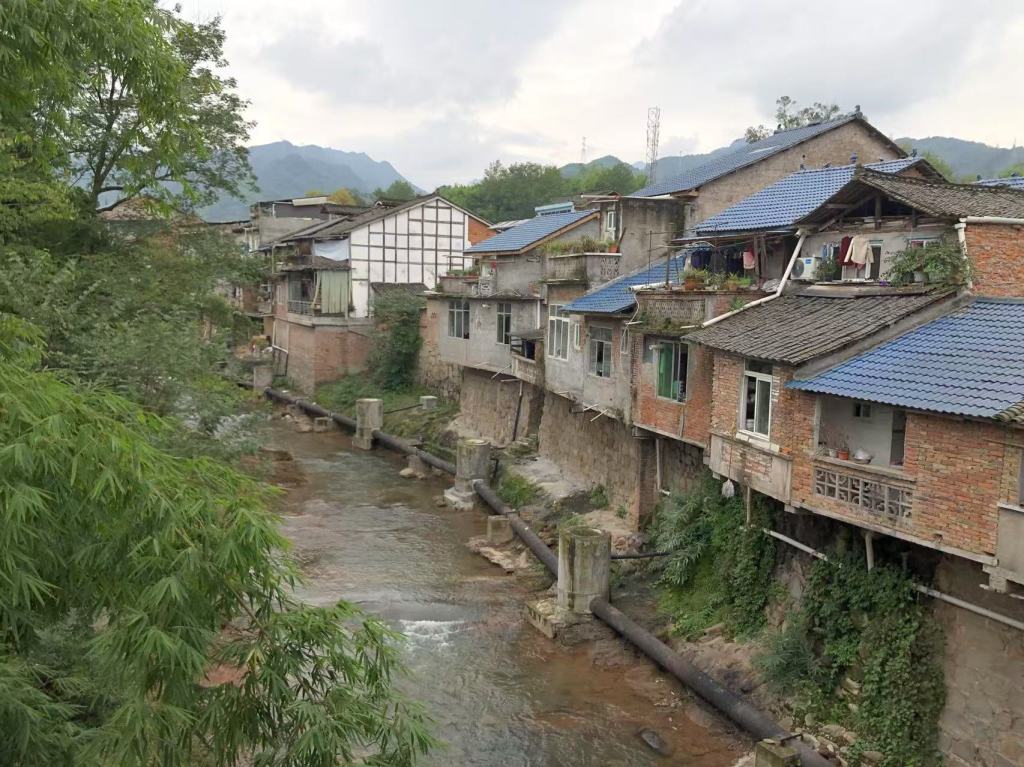
Worth visiting old town, located in Pujiang County. Along the 200 meters long streets are wooden houses with tile-roofs which are unique in western Sichuan. A most attractive thing in this old town is the eleven, 1000-year-old banyan trees along the river banks, which makes the river banks a gathering place for local people.
The Wenfeng Tower built during the Qing Dynasty stands on a street corner. The tower is surrounded by rare opera sculpture with the seal scripts. During festivals, the opera stage is still very busy and attracts locals to visit.
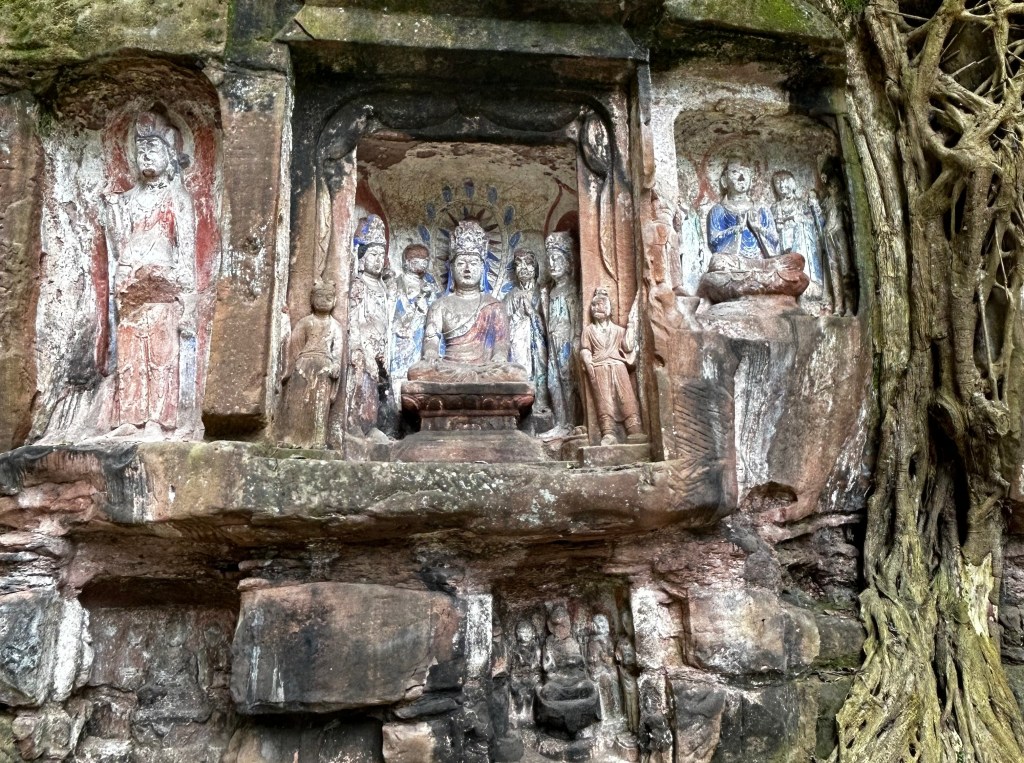
If you go there, do not miss Pujiang stone carvings (grottoes) 浦江石窟 from Tang and Song dynasties (some stretching back to Northern and Southern Dynasties) , Feixian pavilion 飞仙阁 and Longtuowan grottoes 龙拖湾石窟.
Stone-milled douhua, braised pig trotters and braised pigs’ large intestines are popular foods among locals.
South, Shuangliu 双流区
Huanglongxi Ancient Town 黄龙溪古镇
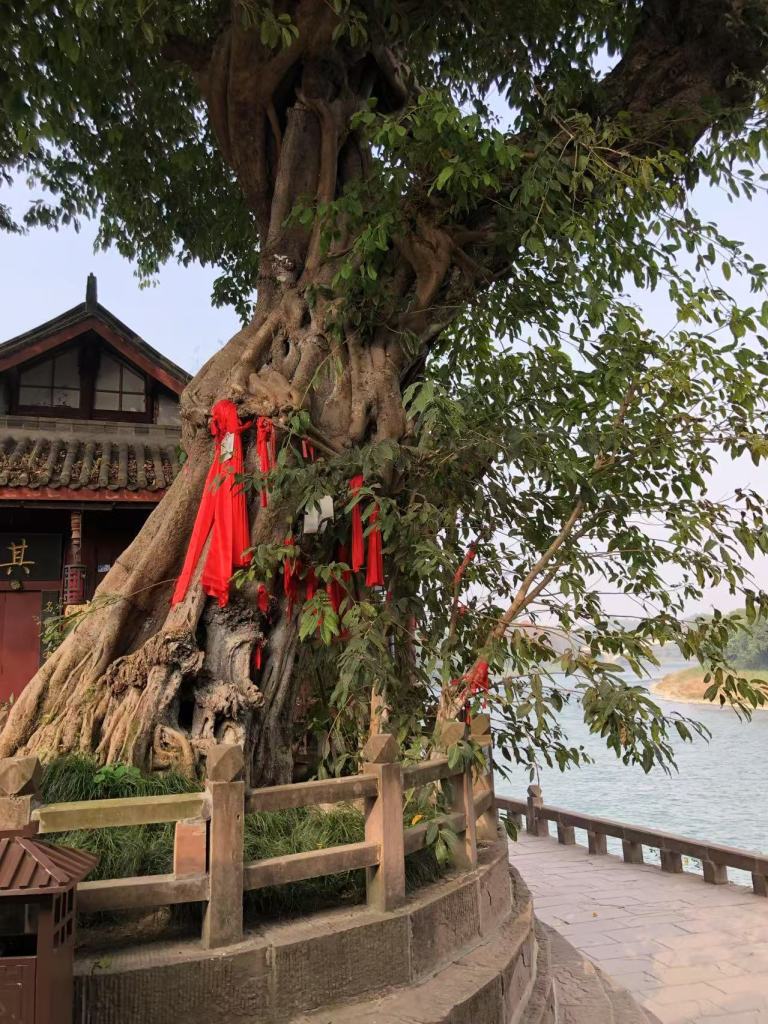
One of my favourites. Located in Shuangliu County, 50 km south of Chengdu, Huanglongxi Ancient Town has a history of over 1700 years. And also associated with Zhuge Liang, who built two temples here, suppressing the Water Dragon. Buildings constructed during the Ming and Qing Dynasties are everywhere and preserved well. The many old temples and the six, 1000-year-old banyan trees have fascinating stories to tell. Stone-milled Douhua (soft tofu) is the specialty of Huanglongxi.
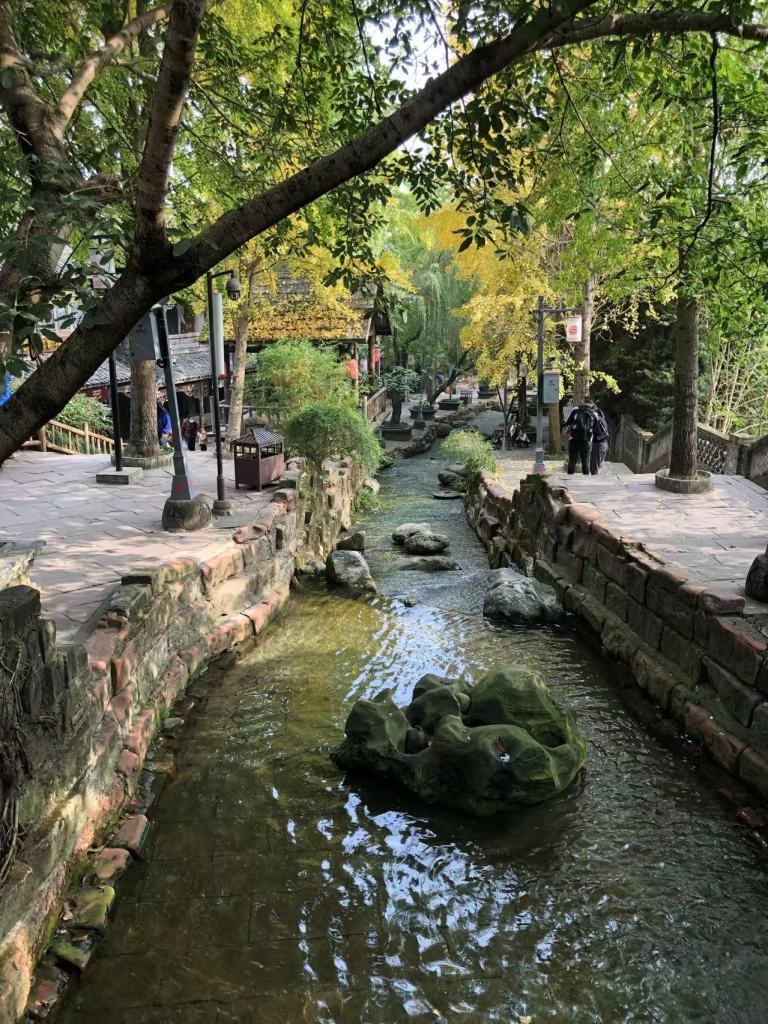
However, it is teahouses that make this ancient town unique. Set along the streets, river banks or even under stands of bamboo the small bamboo tables, bamboo chairs and colorful sunshine umbrella have become an attractive sight. Spend 3 Yuan per bowl to taste the tea and enjoy a tea break.
East, Longquanyi 龙泉驿区
Luodai Ancient Town 洛带古镇
Well worth visiting, Luodai Ancient Town was established during the Three Kingdoms Period and located 15 km north of Longquan Town. Hakka people make up 90% of the residents and therefore it is called the No.1 Hakka Town in Western China. Most residents are descendents of Cantonese people. They maintain some of their Hakka culture illustrated in their food, dress and other cultural activities.
The highlights of the town are its Hakka Assembly Halls with the most famous being Guangdong Hakka Assembly Hall and Jiangxi Hakka Assembly Hall. Other scenic spots like the church, Yanxia Cave and Yudai Lake are also popular. Not far away there is a Great Wall replica with a very nice view.
Local food of the town is Hakka dish style. The most notable are Salt Roasted Chicken and Stuffed Bean Curd.
East, Jintang county 金堂县
Wufengxi Ancient Town 五凤溪古镇
Well worth visiting picturesque Ancient town in Jintang county not far away from Longquan. There are three major docks in western Sichuan, namely Wufeng Creek, Luodai, and Huaikou. Wufeng Creek is the largest waterway dock in Western Sichuan. It is embedded in the mountains and rivers, with a very unique Feng Shui auspicious layout. Wufeng Creek has mountains, water, and phoenix, with rich cultural heritage. When refugees filled Sichuan in the old days, a large number of immigrants from Guangdong, Guangxi, and Shanxi migrated to Wufeng Creek. They not only lived in harmony with the local indigenous residents, but also brought their unique folk customs and social culture. After the integration of several cultures, the unique local culture of Wufeng Creek was formed. In addition, there are also a large number of temples and places of worship in the town. The unique immigrant culture, religious culture, dock culture, and philosophy blend together in Wufeng Creek, giving birth to many famous figures and social figures such as modern philosopher He Lin.
Yunding Stone City 云顶石城
Worth visiting amazing and for some reason not advertised place on the top of the mountain. Located in Jintang, so can be combined with Wufengxi Ancient town. The best time to visit – in November-December, when gingko trees turns yellow. Due to its peak resembling a city wall, it was formerly known as “Shicheng Mountain”. The construction of Buddhist temples began during the Qi and Liang dynasties of the Southern Dynasties, and they were expanded and cultivated throughout history, with a grand scale. The existing Yunding Stone City Site, Yunding Mountain Temple, as well as 41 temples, temples, sculptures, inscriptions, murals, tower inscriptions, and other cultural relics.
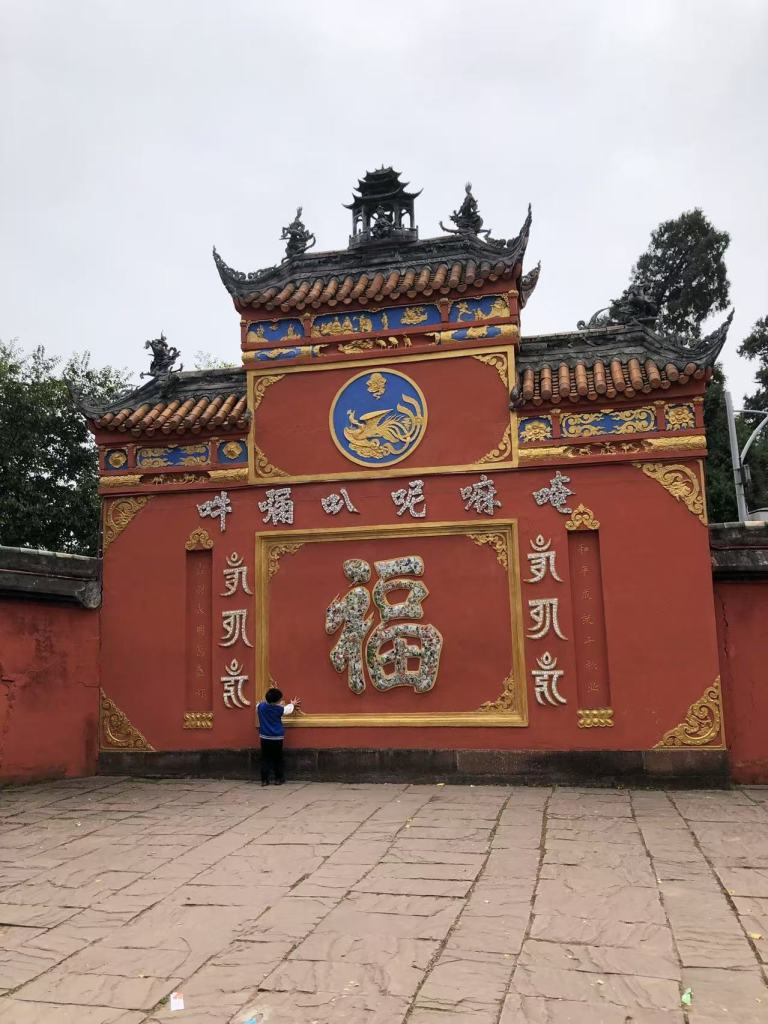
Shiqiao Ancient Town石桥古镇
Located at the Southeast of Chengdu, in Dazhou. According to the county chronicle, Shiqiao was built during the Han Dynasty and established as Taiping County during the Tang Dynasty (618-907). Shiqiao Town has a long history and culture, pure folk customs, and the renowned “Red First Street of China” both domestically and internationally, which has attracted a large number of tourists to the ancient town. The traditional “fireworks”, “dragon lanterns”, “lion dances”, “suona”, and “fireworks racks” (won first and second prizes in the fireworks competition held in Chengdu in Sichuan Province in 1959 and 1968, respectively) and “mountain climbing wrestling” are well-known in China and are renowned in China.
Hope you will have time to visit all of them, like I did and enjoy charming and attractive ancient streets.
Helena Avdjukevica
 Walk with the Dragon